
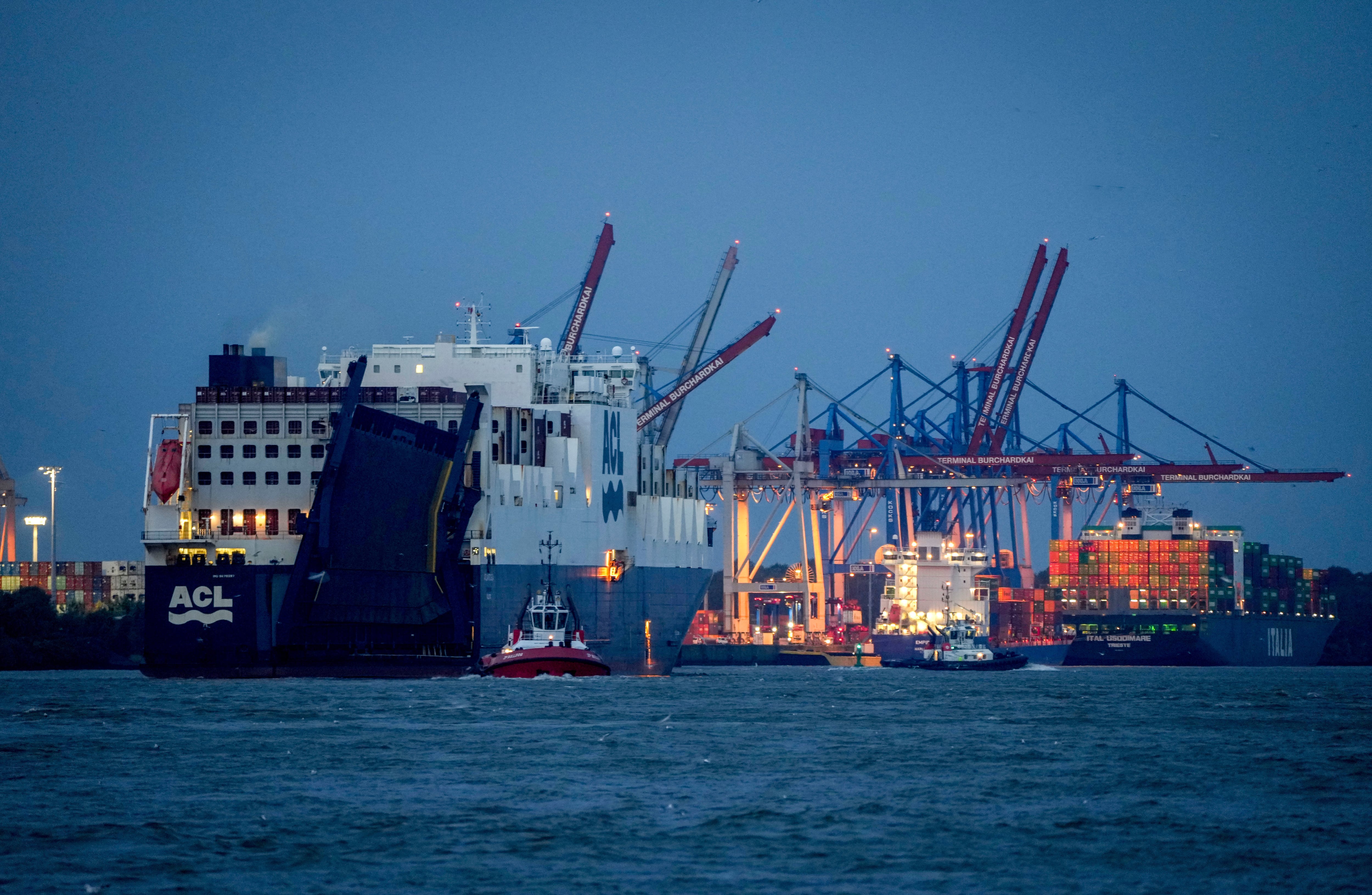
FRANKFURT, Germany (AP) — The European economy recorded modest growth at the end of last year, pushing past turmoil over higher U.S. tariffs. But now the economy faces another hurdle: a stronger euro against the dollar that could weigh on exports.
Growth in the 21 countries that use the shared euro currency came in at 0.3% for the last three months of 2025, matching the figure from the third quarter, the EU statistics agency Eurostat reported Friday. Growth compared with the fourth quarter of 2024 was 1.3%.
Moderate growth has defied recession fears from earlier in the year, when US President Donald Trump threatened to raise tariffs to levels that could have devastated trade. Talks settled on a 15% cap on U.S. tariffs, or import taxes, on goods from the European Union. The higher tax isn’t great for business — but the certainty resulting from the deal let companies at least go ahead and plan.
That assurance was dented after the quarter ended when Trump on Jan. 17 threatened EU member countries with higher tariffs for supporting Greenland against his calls for a U.S. takeover. Trump later withdrew the threat.
European services businesses — a broad category ranging from hairdressers to medical treatment — have shown moderate growth according to the S&P Global survey of purchasing managers. Exports have tanked and the industry continues to lag but showed improvement toward the end of 2025. Lower inflation of 1.9% in December — after a painful spike in 2022-2023 — and rising wages have left consumers with more purchasing power and willingness to spend.
The latest threat is the dollar’s steep fall against the euro. It is at its weakest for 4 1/2 years, which makes European exports less competitive on price in a key foreign market.
The dollar has weakened due to fears that Trump’s tariffs will slow growth and that his attacks on U.S. Federal Reserve Chair Jerome Powell will undermine the U.S. central bank’s role as an inflation fighter and protector of the dollar’s worth. The euro has risen 14.4% against the dollar in the past 12 months and traded at $1.19 on Friday.
Analysts are saying that if the dollar’s weakness against the euro continues, the European Central Bank may cut interest rates later this year to stimulate growth. The ECB holds a rate-setting meeting on Thursday but is not expected to change rates then.
Germany showed improved growth at 0.3% in the quarter, its best quarterly performance in three years, but still faces serious short- and long-term headwinds. The eurozone’s largest economy is still waiting for infrastructure and defense spending set in motion by Chancellor Friedrich Merz to show its effects through increased growth. Germany grew 0.2% last year, its first year of growth after two years of declining output. The government on Wednesday cut its growth outlook for this year to 1% from 1.3% previously.
Germany has struggled with a raft of troubles: higher energy prices after the loss of Russian natural gas due to the war against Ukraine, a shortage of skilled labor, increasing Chinese competition in key export sectors such as autos and industrial machinery, years of underinvestment in growth-promoting infrastructure, and too much red tape.
Growth for the broader 27-country European Union also came in at 0.3% for the fourth quarter of 2025 and 1.4% compared with the year-earlier quarter. Not all EU members have moved to join the euro, which gained its 21st member in January when Bulgaria joined.
Copyright 2026 The Associated Press. All rights reserved. This material may not be published, broadcast, rewritten or redistributed without permission.