


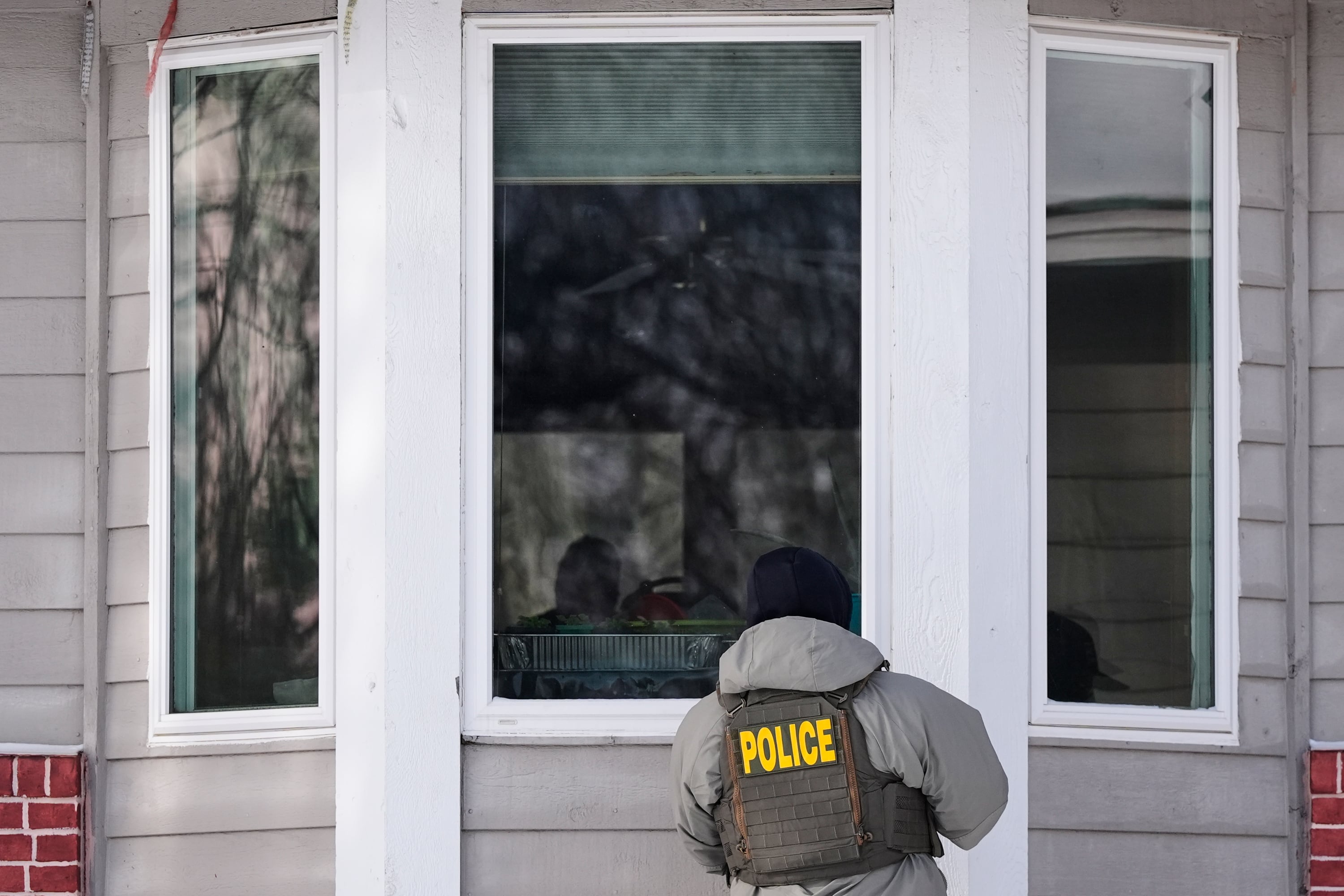
MINNEAPOLIS (AP) — There was the pregnant woman who missed her medical checkup, afraid to visit a clinic during the Trump administration’s sweeping Minnesotaimmigration crackdown. A nurse found her at home, already in labor and just about to give birth.
There was the patient with kidney cancer who vanished without his medicine in immigration detention facilities. It took legal intervention for his medicine to be sent to him, though doctors are unsure if he's been able to take it.
There was the diabetic afraid to pick up insulin, the patient with a treatable wound that festered and required a trip to the intensive care unit, and the hospital staffers — from Latin America, Somalia, Myanmar and elsewhere — too scared to come to work.
“Our places of healing are under siege,” Dr. Roli Dwivedi, past president of the Minnesota Academy of Family Physicians, said Tuesday at a state Capitol news conference in St. Paul, where doctor after doctor told of patients suffering amid the clampdown.
For years, hospitals, schools and churches had been off-limits for immigration enforcement.
But a year ago, the Trump administration announced that federal immigration agencies could now make arrests in those facilities, ending a policy that had been in effect since 2011.
“I have been a practicing physician for more than 19 years here in Minnesota, and I have never seen this level of chaos and fear,” including at the height of the COVID-19 crisis, Dwivedi said.
‘I can’t believe we're having to resort to this'
At Minneapolis' sprawling downtown Hennepin County Medical Center, doctors and nurses have moved communications about the crackdown to an encrypted group chat, where they have described run-ins with Immigration and Customs Enforcement officials, including a recent incident when an officer was accused of unnecessarily shackling a patient.
The medical center, a nationally known trauma hospital, has the busiest emergency room in the state and is an important safety net for patients who are uninsured, including people in the U.S. illegally.
“I can’t believe we’re having to resort to this,” said one nurse who was not authorized to speak to the media and did so on the condition of anonymity. Plainclothes ICE officers have become a fixture around the hospital, the nurse told The Associated Press, focusing on people of color and asking both patients and employees for paperwork as they leave.
“How is this all happening?” the nurse asked.
The medical chaos isn't limited to Minnesota. Crackdowns are happening in many states -- especially Democratic-led ones -- to varying degrees.
Nurses say ICE agents have pressed to get detainees discharged from a Portland hospital
In Oregon, for example, a nurses union has raised concerns about ICE officers bringing detainees to a Portland hospital. In a letter to Legacy Emanuel Medical Center, the Oregon Nurses Association wrote that officers have pressured nurses and doctors to skip assessments, tests or monitoring to have them discharged more quickly.
“Nurses have reported instances where physicians have recommended continued hospitalization, but ICE insisted on removing the patient, effectively forcing discharge over clinical advice,” the union wrote. “In some cases, nurses report that detainee patients have had little or no opportunity to participate meaningfully in these decisions; the officers simply announce, ‘We’re going,’ and Legacy staff are left to accommodate.”
In an emailed statement, Legacy Health said it has reviewed its policies to “ensure we are providing the protection we can to impacted communities, while complying with both state and federal laws.” It added that it's "committed to providing medical care to everyone who needs it, including individuals who are in custody and regardless of immigration or citizenship status.”
‘Our patients are missing’
The Minnesota crackdown, which began late last year, surged to unprecedented levels in January when the Department of Homeland Security said it would send 2,000 federal agents and officers to the Minneapolis area in what it called the largest-ever immigration enforcement operation.
More than 3,000 people in the country illegally have been arrested during what it dubbed Operation Metro Surge, the government said in a Monday court filing.
“Our patients are missing,” with pregnant women missing out on key prenatal care, said Dr. Erin Stevens, legislative chair for the Minnesota section of the American College of Obstetricians and Gynecologists. Requests for home births have also increased significantly, “even among patients who have never previously considered this or for whom, it is not a safe option,” Stevens said.
The surge in the deeply liberal Twin Cities has set off clashes between activists and immigration officers, pitted city and state officials against the federal government, and left a mother of three dead, shot by an ICE officer in what federal officials said was an act of self-defense but that local officials described as reckless and unnecessary.
The Trump administration and Minnesota officials have traded blame for the heightened tensions.
The latest flare-up came Sunday, when protesters disrupted a service at a St. Paul church because one of its pastors leads the local ICE field office. Some walked right up to the pulpit at the Cities Church, with others loudly chanting “ICE out.”
The U.S. Department of Justice said it has opened a civil rights investigation into the church protest.
___
Rush reported from Portland, Oregon. Jack Brook in Minneapolis and Jim Mustian in New York City contributed to this report.
Copyright 2026 The Associated Press. All rights reserved. This material may not be published, broadcast, rewritten or redistributed without permission.