

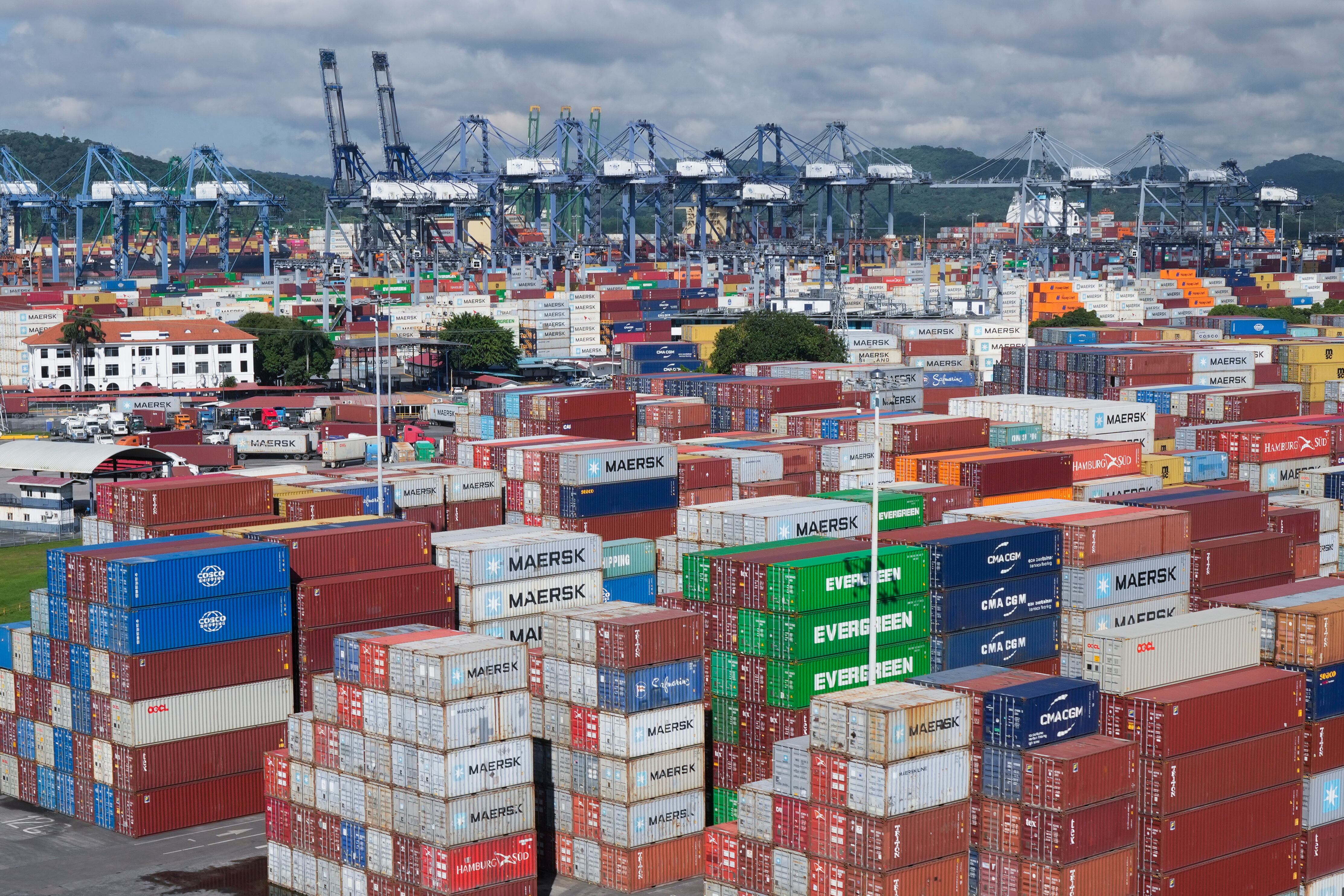

PANAMA CITY (AP) — Panama’s Supreme Court ruled late Thursday that the concession held by a subsidiary of Hong Kong’s CK Hutchison Holdings to operate ports at either end of the Panama Canal is unconstitutional, an outcome that advances a U.S. aim to block any influence by China over the strategic waterway.
The court’s ruling followed an audit by Panama’s comptroller, which alleged irregularities in the 25-year extension of the concession granted in 2021.
The Trump administration made blocking China’s influence over the Panama Canal one of its priorities in the hemisphere. Panama was U.S. Secretary of State Marco Rubio’s first overseas stop as the United States’ top diplomat.
Despite the insistence by Panama’s government and the canal authority that China has no influence over its operations, Rubio made clear that the U.S. viewed the operation of the ports as a national security issue for the U.S. President Donald Trump had gone so far as to say Panama should return the canal to U.S. control.
The court’s brief statement gave no guidance on what would happen to the ports now.
CK Hutchison’s subsidiary, Panama Ports Company, said it has not been notified yet about the decision but insisted its concession was the result of transparent international bidding.
It said in its statement that the ruling “lacks legal basis and jeopardizes not only PPC and its contract, but also the well-being and stability of thousands of Panamanian families who depend directly and indirectly on port activity, but also the rule of law and legal certainty in the country.”
It said that it reserves all rights to proceed legally in Panama or elsewhere, but gave no more details.
In Beijing, China's foreign ministry spokesperson, Guo Jiakun, told reporters that China would take all necessary measures to safeguard the legitimate rights and interests of “the Chinese company,” without elaborating on the potential steps.
Political analyst Edwin Cabrera said once the parties are notified, the issue of what to do with the ports goes to Panama’s executive branch, specifically the Panama Maritime Authority.
“I have the impression from conversations that I have had with some people that the operation (of the ports) will not stop,” Cabrera said.
CK Hutchison Holdings announced a deal last year to sell its majority stake in the Panamanian ports and others around the world to an international consortium that included BlackRock Inc. But the deal appeared to stall over objections by the Chinese government.
The company said last July that it was considering seeking a Chinese investor to join as a significant member of the consortium, a move that some interpreted as way to please Beijing, but CK Hutchison hasn't said more since.
The awkward position the company found itself in highlights the challenges Hong Kong business elites face in navigating Beijing’s expectations of national loyalty, especially when relations between China and the United States are strained. CK Hutchison is owned by the family of Hong Kong’s richest man, Li Ka-shing.
In parallel, Panama’s comptroller audited the concession to the Panama Ports Company, which had held the contract to operate the ports since 1997. The concession was renewed in 2021 for 25 years, during the prior Panamanian administration.
Comptroller Anel Flores said the audit found payments that were not made, accounting errors and the apparent existence of a “ghost” concessions operating within the ports since 2015. The company denied those allegations.
The audit determined that the irregularities had cost the government about $300 million since the concession was extended and an estimated $1.2 billion during the original 25-year contract.
Flores also said the extension was granted without the required endorsement of his office.
On July 30, the comptroller challenged the Panama Ports Company’s contract to operate the ports before the Supreme Court.
___
Associated Press writer Kanis Leung in Hong Kong contributed to this report.
Copyright 2026 The Associated Press. All rights reserved. This material may not be published, broadcast, rewritten or redistributed without permission.