


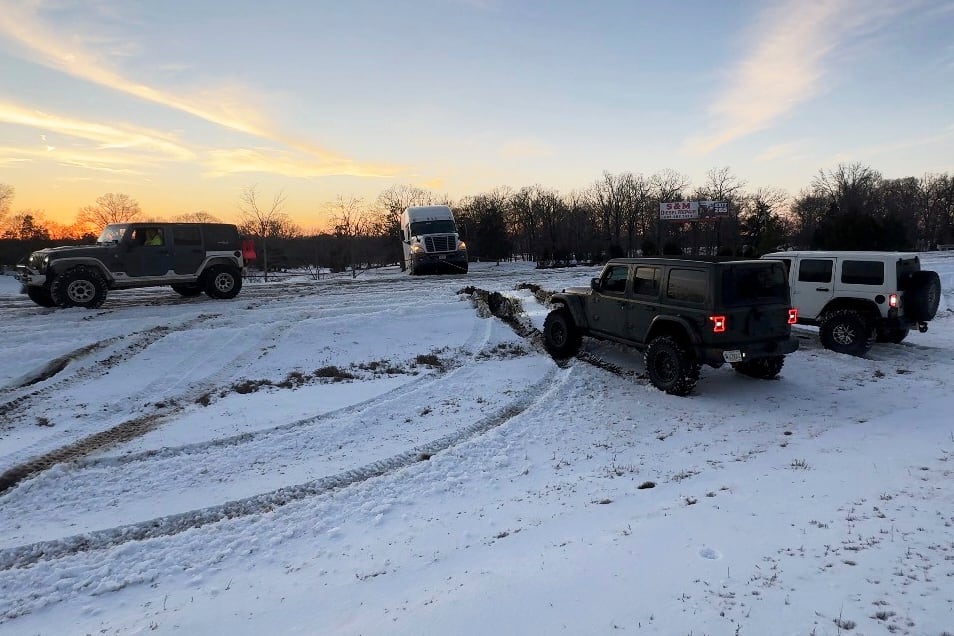
NASHVILLE (AP) — About 240 million people were under cold weather advisories and winter storm warnings Saturday as a powerful system threatened to bring howling winds, flooding and heavy snow to the East Coast — including blizzardlike conditions stemming from a “bomb cyclone” in the Southeast, a forecaster said.
Temperatures were plummeting even as tens of thousands of homes and businesses remained without power from a blast of snow and ice last weekend that snarled traffic, knocked down trees, and caused more than 100 deaths. A low temperature of minus 27 degrees Fahrenheit (minus 33 degrees Celsius) was recorded Saturday morning in West Virginia, said Bob Oravec, lead meteorologist for the National Weather Service in College Park, Maryland.
Parts of the southern Appalachians, the Carolinas and Georgia could see 6 to 10 inches (15 to 25 centimeters) of snow, he said. The Carolinas could see blizzard conditions stemming from the bomb cyclone, a term Oravec used to described an intense, rapidly strengthening storm system off the Southeast coast packing strong winds.
“Anytime you have cold weather advisories or extreme cold warnings, it is dangerous to be outside. Frostbite can occur,” Oravec said. “Especially in areas that have or are experiencing power issues still, prolonged exposure to cold weather is not good for yourself.”
In Myrtle Beach, South Carolina — whose official seal is the sun, palm trees and a sea gull — 6 inches (15 centimeters) of snow was expected. The city has no snow removal equipment, and authorities planned to “use what we can find,” Mayor Mark Kruea said.
Subfreezing weather was forecast into February, with heavy snow in the Carolinas, Virginia and northeast Georgia over the weekend including up to a foot (30 centimeters) in parts of North Carolina. Snow was also said to be possible from Maryland to Maine.
The frigid cold was expected to plunge as far south as Florida.
Temperatures neared the teens (minus 10 Celsius) in Nashville, Tennessee, and frustrations bubbled up for those who spent a week without power.
Terry Miles, a 59-year-old construction worker whose home has had no electricity since a previous storm struck Sunday, resorted to using a fish fryer for heat and worried about the danger of carbon monoxide.
“I’m taking a chance of killing myself and killing my wife, because — Why?” Miles said after attending a Nashville Electric Service news conference intended to showcase the utility’s repairs on poles and lines. He then pointed to officials.
More than 127,000 homes and businesses were without electricity, mostly in Mississippi and Tennessee, according to the outage tracking website poweroutage.us. That included more than 47,000 in Nashville as of Saturday morning.
Tennessee Gov. Bill Lee said he shared “strong concerns” with leadership of Nashville Electric Service, adding that residents “need a clear timeline for power restoration, transparency on the number of linemen deployed, and a better understanding of when work will be completed in their neighborhood.”
The utility has defended its response, saying the storm that struck last weekend was unprecedented.
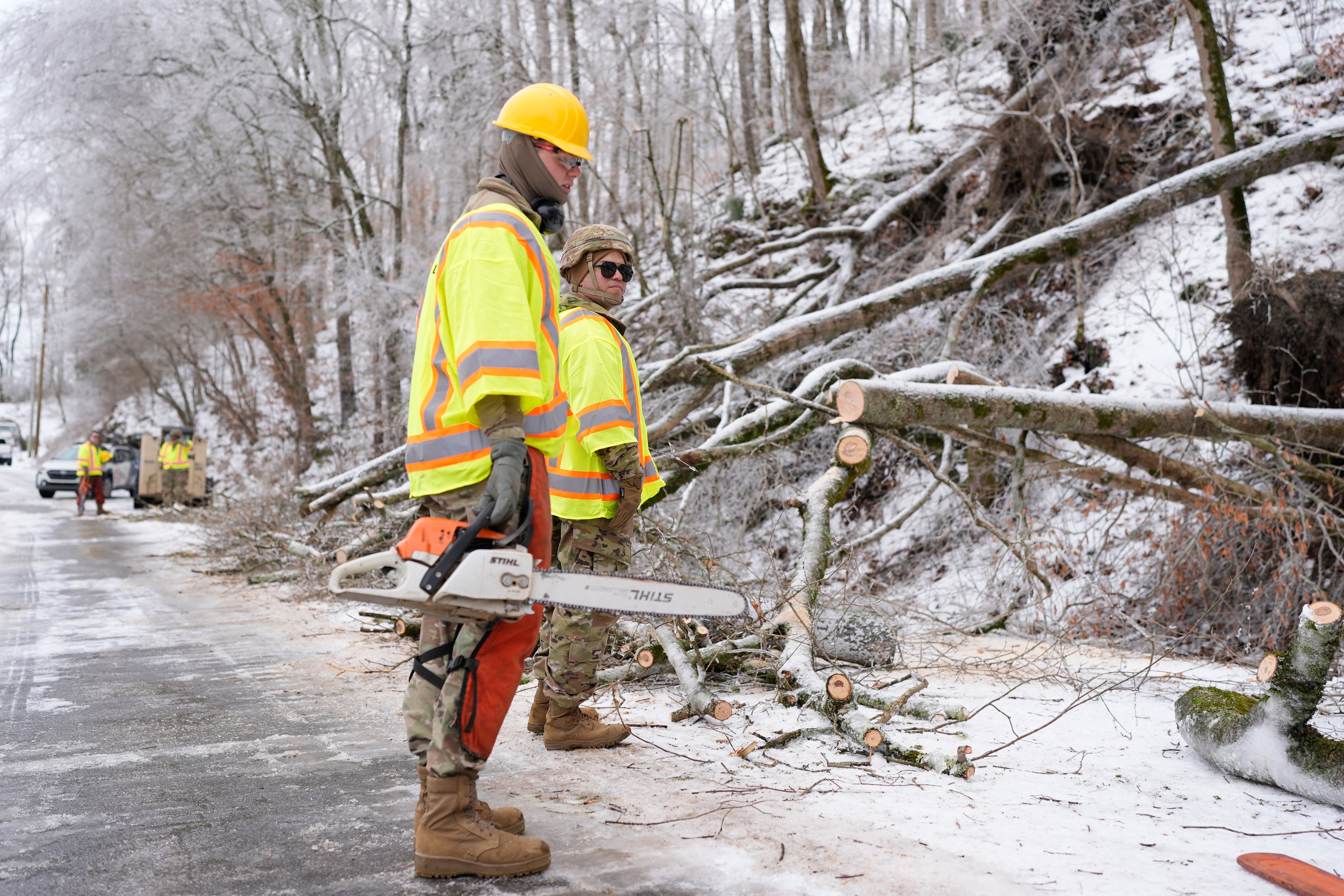
Mississippi officials said the massive winter storm was its worst since 1994. About 80 warming centers were opened, and National Guard troops delivered supplies by truck and helicopter.
Experts warned of the growing risks of hypothermia. Frostbite was also a concern in the South, where some people may lack sufficiently warm clothing, said Dr. David Nestler, an emergency medicine specialist at the Mayo Clinic in Minnesota.
More than 100 people have died from Texas to New Jersey, roughly half of them in Tennessee, Mississippi and Louisiana. While some deaths have been attributed to hypothermia, others are suspected to be related to carbon monoxide exposure. Officials have not released specific details about some deaths.
In North Carolina, hundreds of National Guard soldiers readied to help and state workers worked to prepare roads.
The city of Wake Forest saw a steady stream of people filling propane tanks Friday at Holding Oil and Gas, including José Rosa, who arrived after striking out at three other places.
“I’m here in this cold weather, and I don’t like it,” Rosa said as he held a 20-pound (9-kilogram) tank.
In Dare County, home to much of North Carolina’s Outer Banks, residents worried that more unoccupied houses in communities like Rodanthe and Buxton could collapse into the Atlantic Ocean.
___
Associated Press writers Jeff Martin in Kennesaw, Georgia; Jeffrey Collins in Columbia, South Carolina; Gary Robertson in Raleigh, North Carolina; Jonathan Mattise and Travis Loller in Nashville, Tennessee; Allen G. Breed in Wake Forest, North Carolina; Sarah Brumfield in Washington; David Fischer in Fort Lauderdale; Devi Shastri in Milwaukee and Hallie Golden in Seattle contributed.
Copyright 2026 The Associated Press. All rights reserved. This material may not be published, broadcast, rewritten or redistributed without permission.