

Blizzardlike conditions stemming from a “ bomb cyclone ” hammered parts of the Carolinas on Saturday and ushered in frigid temperatures to much of the East Coast, and tens of thousands of homes and businesses in Tennessee and Mississippi remained without power after being hit by a different icy storm last week.
Charlotte, North Carolina, saw one of its heaviest snowfalls in years, with roughly a foot (30 centimeters) or more in parts of the region.
That caused an hourslong mess on Interstate 85 northeast of the city, after a noninjury crash left dozens of semis and other vehicles backed up into the evening, according to the State Highway Patrol. The agency said it counted at least 750 traffic collisions, but no fatalities.
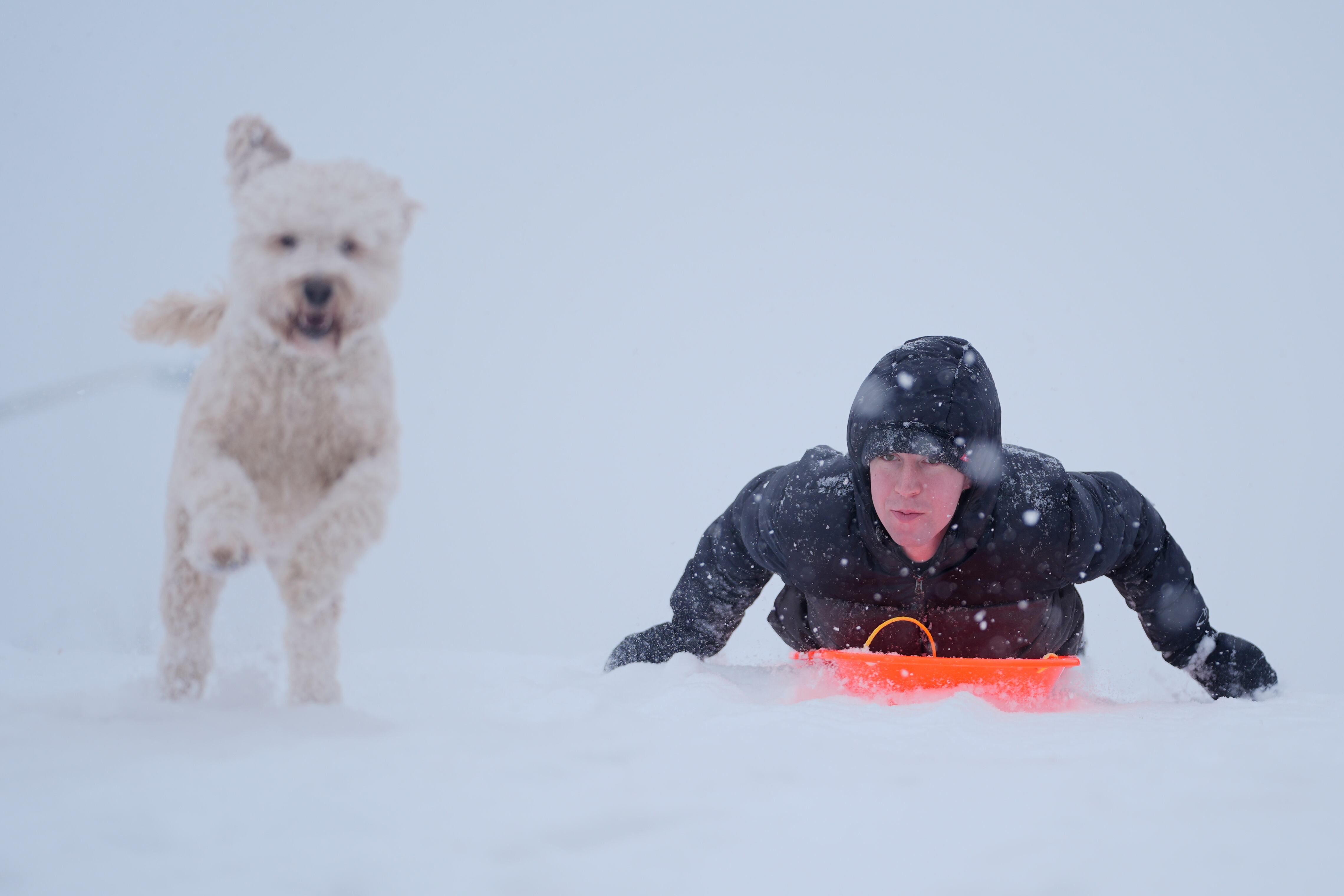
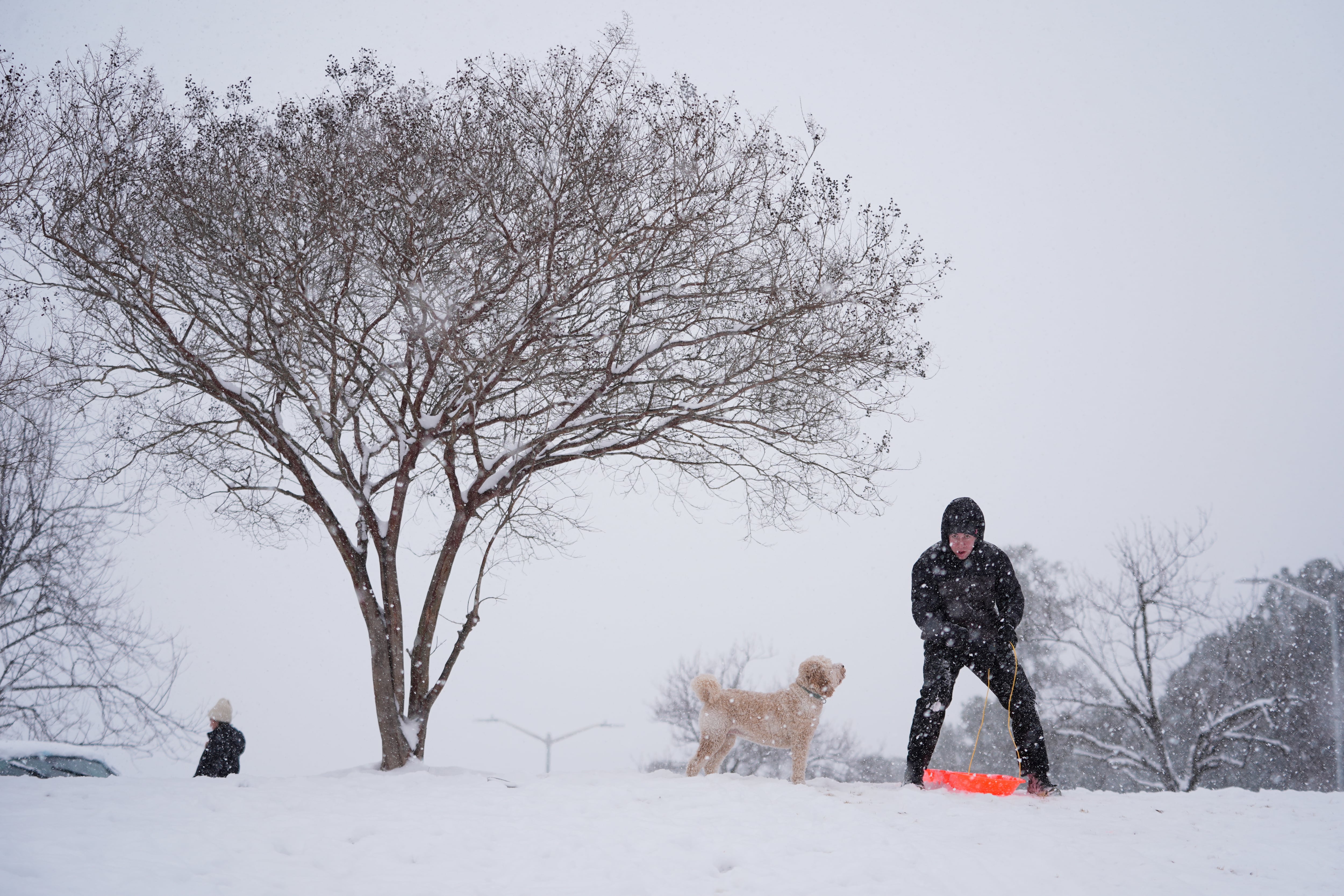
As snow came down steadily throughout the day, some people went out sledding with their families and dogs. Others stayed cozy at home to avoid treacherous traveling conditions.
Temperatures were expected to dip into the teens and single digits late Saturday and overnight.
About 240 million people were under cold weather advisories and winter storm warnings, said Bob Oravec, lead meteorologist for the National Weather Service in College Park, Maryland. A low of minus 27 Fahrenheit (minus 33 Celsius) was recorded in West Virginia, and the frigid cold was expected to plunge as far south as Florida.
Some areas unaccustomed to snow braced for several inches to fall by Sunday.
Hundreds of flights were canceled or delayed at airports in Atlanta, Charlotte and Raleigh, North Carolina, according to FlightAware, a flight tracking and data company.
Heavy snow hits the Carolinas
Snow blanketed the neighborhood of Lee Harrison, an insurance agent in a town outside of Greenville, North Carolina, and he planned to take his three daughters sledding in the backyard.
“We’re not gonna drive anywhere,” Harrison said. “It’s thick enough that I would not feel comfortable driving with our family.”
Subfreezing weather and heavy snow were forecast in the Carolinas, Virginia and northeast Georgia continuing into Sunday. Snow was also said to be possible from Maryland to Maine.
Cindy Symonds, a teacher who lives near Columbia, South Carolina, said her husband stocked up “every snack known to mankind” in preparation. Storms in the area typically drop just an inch or two (a few centimeters), so the plan now was to stay off the roads.
“This is a complete, you know, aberration for us to have this kind of snow, where it’s coming down consistently for hours on end,” Symonds said.
In Myrtle Beach, South Carolina — whose official seal is the sun, palm trees and a seagull — snow started to accumulate in the evening, with up to 8 inches (20 centimeters) possible overnight.
With no snow-removal equipment of its own, the city was working with county and state officials, Mayor Mark Kruea said.
Many homes and businesses still in the dark
More than 197,000 customers were without electricity, mostly in Mississippi and Tennessee, according to the outage tracking website poweroutage.us.
Amanda Linton, a resident of Holly Springs, Mississippi, near the Tennessee border, and her family of five have tried to keep busy and stay positive during the weeklong outage. They have been stuck in the house for days with their dogs, chickens and ducks, with roads outside coated by inches (centimeters) of ice.
Linton said they managed to buy a generator ahead of the storms.
“Just lots of games and reading and really just trying to keep mine and my husband’s spirits up so that we’re staying positive for our kids,” Linton said.
Some 48,000 customers in and around Nashville, Tennessee, were still waiting for power to return. Nashville Electric Service estimated that 90% will have it back by Tuesday but it could take until next weekend — two weeks after the ice storm — for some.
Gov. Bill Lee said he shared “strong concerns” with leadership of the utility, which has defended its response and said the storm was unprecedented.
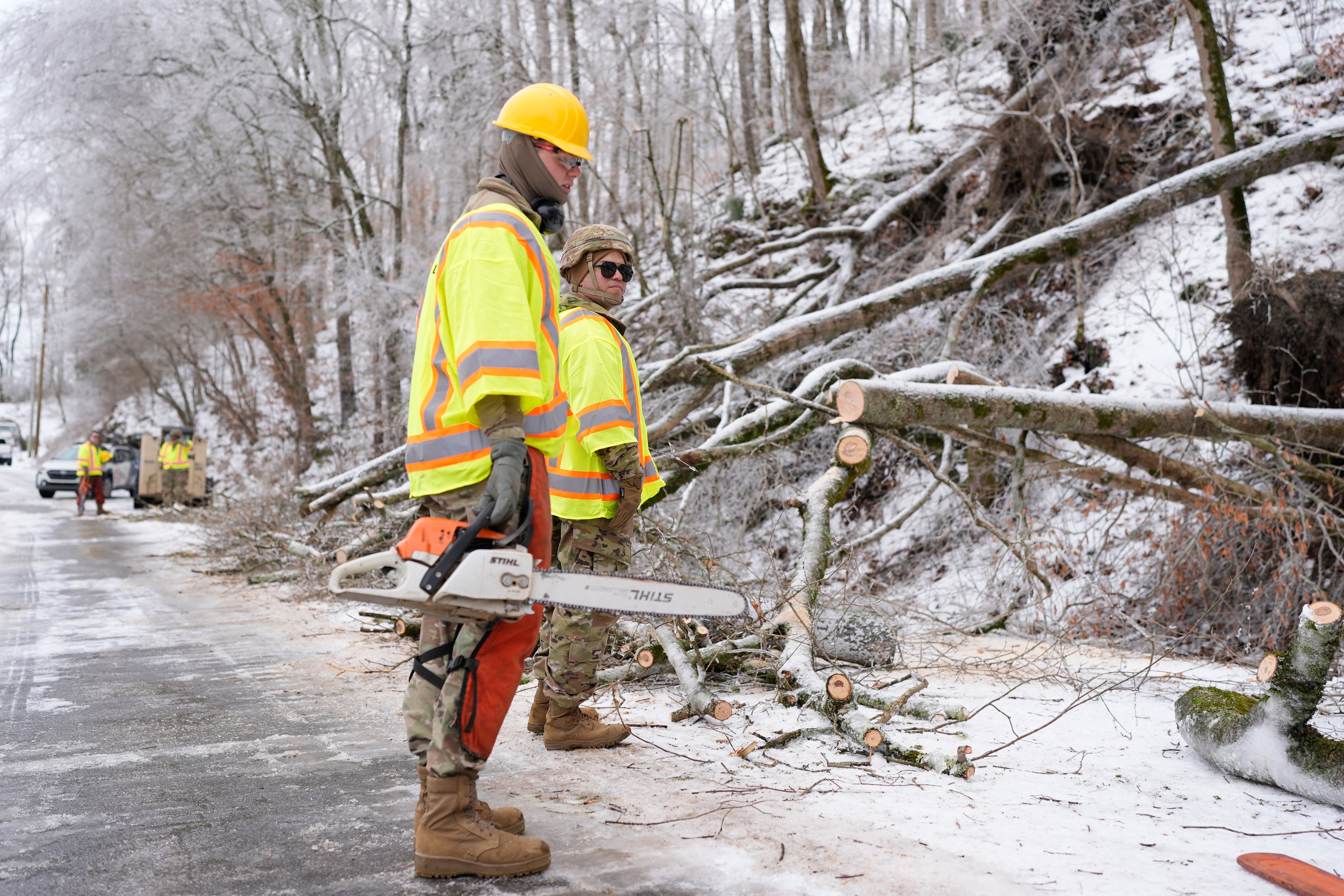
Mississippi officials said that was the state's worst winter storm since 1994. About 80 warming centers were opened, and National Guard troops delivered supplies by truck and helicopter.
Dangerous cold
In Georgia, 65-year-old Dolla Johnson, who is homeless, slept in a warming center.
“If I hadn’t have been here, I would be sleeping outside,” Johnson, said. “There’s nowhere else to go. The bridges are not safe. Everything’s freezing over.”
Experts warned of the risk of hypothermia and frostbite.
More than 100 people have died from Texas to New Jersey, roughly half of them in Tennessee, Mississippi and Louisiana. Some deaths have been attributed to hypothermia, while others are suspected to be related to carbon monoxide exposure. Officials have not released specific details about some deaths.
Officials closed a nearly 13-mile (21-kilometer) stretch of a main road in North Carolina’s Outer Banks, citing deteriorating conditions and poor visibility. Through social media the state Department of Transportation warned of likely “ocean overwash” and urged people to stay home.
___
Associated Press writers Julie Walker in New York, Gary Robertson in Raleigh, North Carolina, and Hallie Golden in Seattle contributed.
Copyright 2026 The Associated Press. All rights reserved. This material may not be published, broadcast, rewritten or redistributed without permission.