
There is a lot of talk about affordability in 2026, and it can certainly apply to new vehicles. Many of the latest SUVs and electric vehicles are simply too expensive for people. Buying used is an option, but that means you’ll lose out on getting a full warranty and, of course, that new-car smell. Thankfully, a few automakers still offer inexpensive new sedans priced under $25,000.
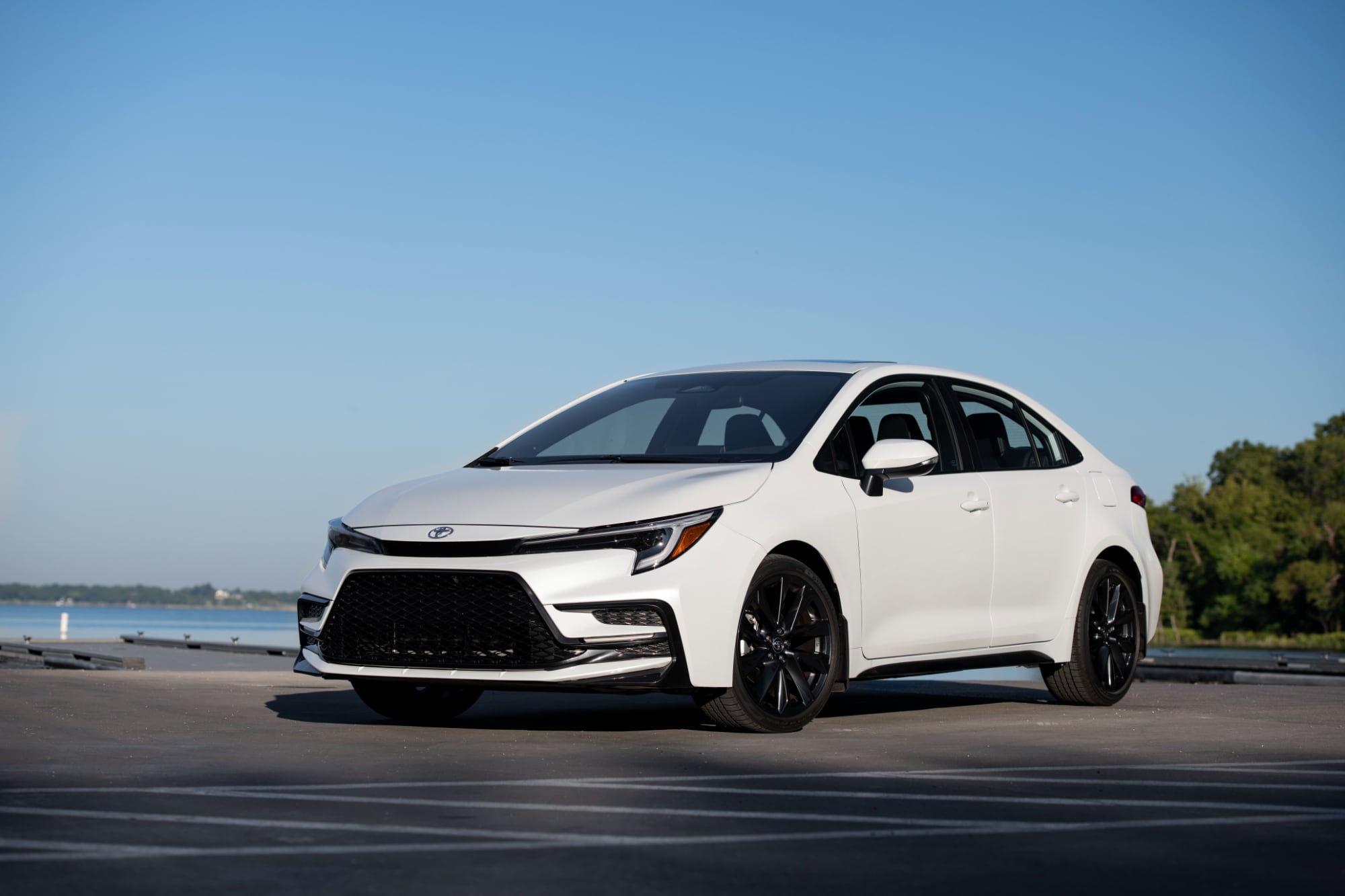
Nissan has redesigned its 2026 Sentra, which is the smallest and least expensive sedan in the brand’s lineup. Nissan has given the car a new look and an interior makeover, featuring improved materials and a large digital display atop the dashboard. It’s a prime competitor to the venerable Toyota Corolla. The latest Corolla generation has been around for a while, but Toyota has spruced up the 2026 version with a few more standard features. Which of these small sedans is the better buy? Edmunds’ auto experts have tested both to find out.
Power and mpg
The Corolla and Sentra come with four-cylinder engines, but the Corolla’s makes more power. Rated at 169 horsepower, the Corolla hustled from zero to 60 mph in 8.8 seconds in Edmunds’ testing. That’s a bit leisurely but still nearly 1 second quicker than the 149-horsepower Sentra, which requires a heavy foot to keep up with highway traffic. The slower Sentra is also less efficient than its Toyota rival. It gets up to an EPA-estimated 33 mpg in combined city/highway driving. The Corolla gets up to 35 mpg combined and delivered even better results in Edmunds’ real-world driving.
The Corolla has other advantages, too. It’s also available as the Corolla Hybrid, which gets up to an EPA-estimated 50 mpg combined. All-wheel drive is also available. It’s only offered with the Corolla Hybrid, but it may appeal to you if you have to frequently drive in wintry conditions. The Sentra doesn’t offer a hybrid powertrain or all-wheel drive.
Winner: Corolla
Technology
For 2026, Nissan overhauled the Sentra’s interior, adding dual 12.3-inch displays for digital gauges and infotainment spanning half the dashboard. The wide-screen array comes standard on all but the base trim. By comparison, the Corolla feels years behind with its standard 8-inch display or optional 10.5-inch touchscreen. Both models come with wireless Apple CarPlay and Android Auto smartphone integration and optional wireless phone charging and upgraded audio systems.
These sedans are similar in the standard advanced driver assist features they offer. These include blind-spot warning and adaptive cruise control with lane centering that can apply light steering corrections to help you keep the car centered in its lane. However, the Sentra takes it further with available features that include enhanced functionality for adaptive cruise control in stop-and-go traffic, rear parking sensors and a high-definition surround-view camera system. It’s an impressive bundle of features for the money.
Winner: Sentra
Interior space and conveniences
Compact cars are tight and tidy by definition, but the Toyota and Nissan are roomier than they look. The Sentra has the edge with more elbow room and front legroom thanks to a slightly longer, wider body, but its sleek roof pinches rear headroom, which taller passengers will notice. Both models come with cloth upholstery to start and synthetic leather on higher trims, but the Sentra’s cabin looks and feels fresher from its recent redesign. The Nissan’s front seats are also among the best in any compact car for keeping you comfortable on long drives.
The Sentra’s 14.3-cubic-foot trunk is large enough for a couple of suitcases and carry-ons. The Corolla’s smaller 13.1 cubic-foot trunk might force you to abandon one of those bags, but you can always opt for the Corolla Hatchback, which beats both with nearly 18 cubic feet of cargo space.
Winner: Sentra
Price and value
The Nissan Sentra starts at $23,845, including the destination fee. The Corolla starts at $24,120 with destination; getting the Corolla Hatchback or Corolla Hybrid will cost approximately $1,500 to $1,900 more. Not only is the Sentra slightly more affordable, it also comes with the larger touchscreen, enhanced cruise control and more trunk space. Moving up to the Sentra SV trim — about $500 more than the base Corolla — adds a few more features, including the larger digital gauge cluster.
But when it comes to performance and efficiency, the Corolla is king. Its stronger engine makes a difference in traffic, and its superior fuel economy can help with saving on gas in the long term.
Winner: tie
Edmunds says
Edmunds officially scores the Sentra slightly higher than the Corolla. But your decision might come down to what you want most. If fuel economy and power are priorities, the Corolla is worth paying a little extra for. But the Sentra otherwise edges it out with superior roominess, utility and technology.
____________
This story was provided to The Associated Press by the automotive website Edmunds.
Dan Frio is a contributor at Edmunds.
Copyright 2026 The Associated Press. All rights reserved. This material may not be published, broadcast, rewritten or redistributed without permission.