


NEW YORK (AP) — As the war in Iran ratchets up, the price of crude oil has been swinging sharply. Consumers are already feeling the effects of the war and its destabilizing effect on worldwide energy production.
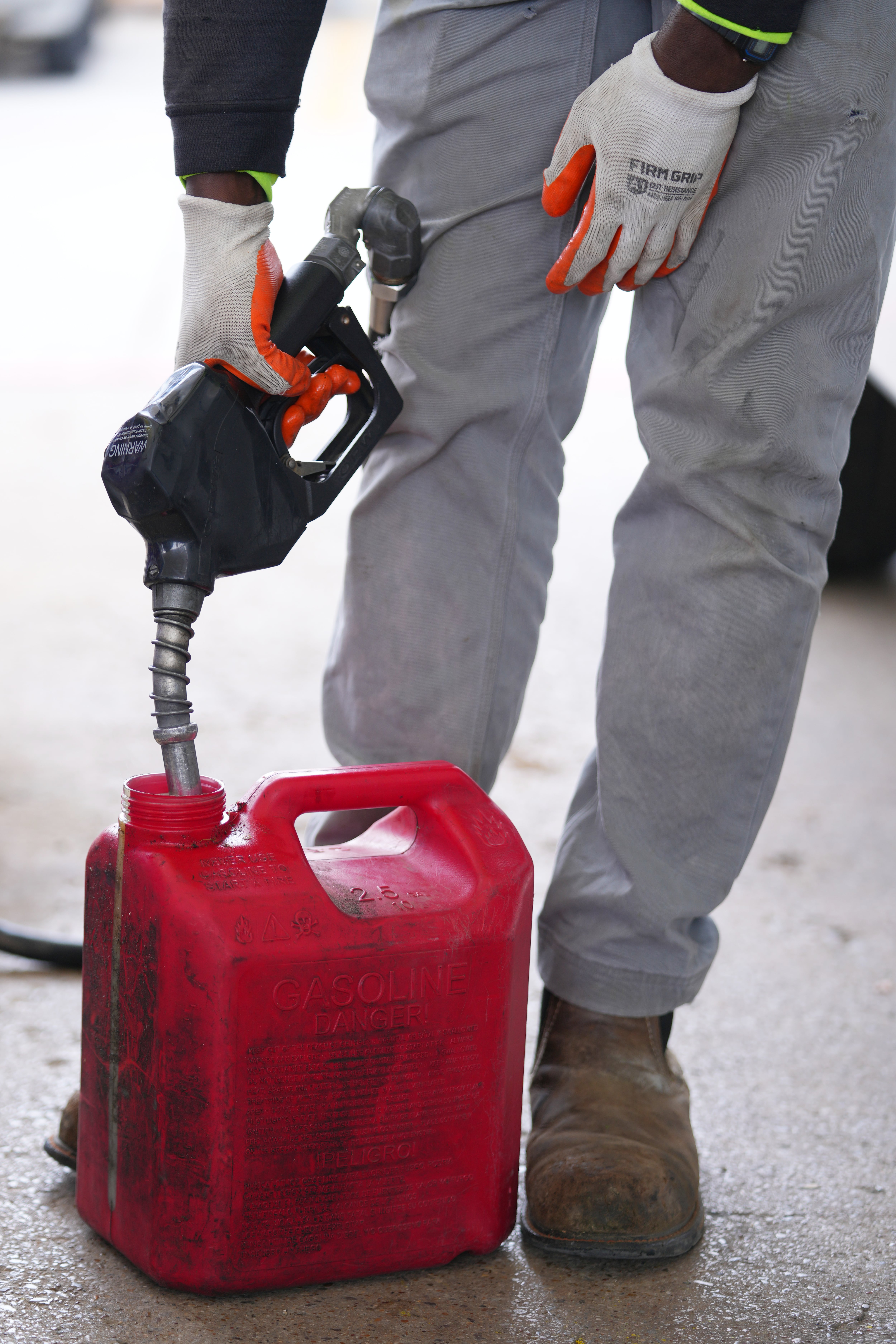
Gasoline prices are climbing, and many people will find some of the most immediate economic pain at the pump.
But not only drivers are affected. Food and nearly everything else that's bought and sold must travel from where it's produced. Those costs will climb with higher gasoline, diesel and jet fuel prices.
Brent crude oil, the international standard, is now trading above $110 a barrel. That will likely be a big factor for inflation. As the war continues, some experts say the price of everything could be affected — which could eat into wider spending down the road.
Here's how the growing cost of oil and gas could impact consumers as the war continues.
At the pump: Gas prices are likely to continue climbing
Gasoline, diesel and jet fuel are made from crude oil. As the cost of crude climbs, so do the prices of those widely used products, which keep equipment, cars, buses, delivery trucks and airplanes running.
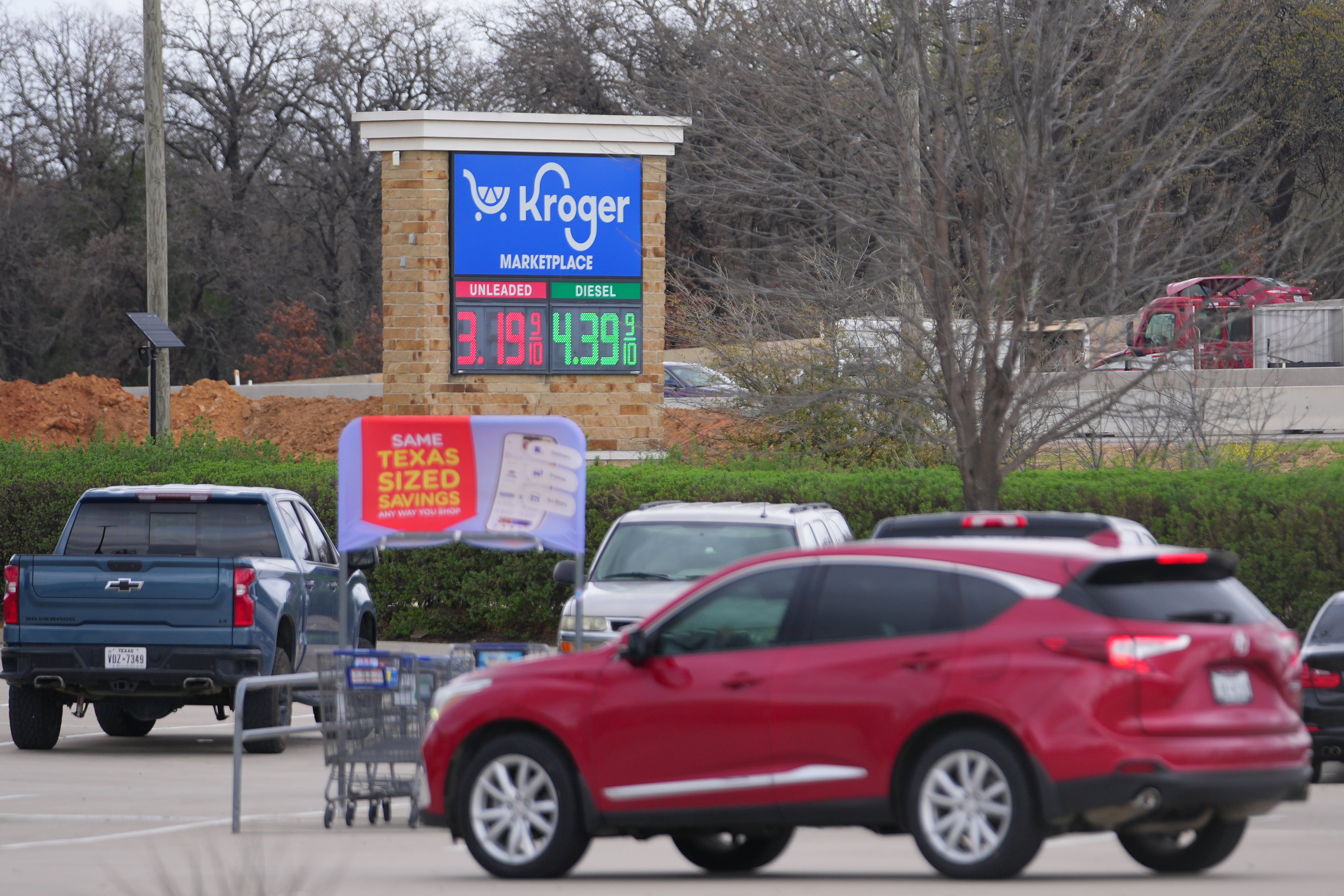
Across the U.S., gas prices are now near their highest levels since 2022. Drivers were paying an average of $3.88 for a gallon of regular gasoline on Thursday, compared with $2.98 before the war started. Prices have increased about 30% since the U.S. and Israel attacked Iran.
Prices vary across states. In California, drivers were paying nearly $5.62. Some of California’s refineries have shut down in recent years, so the massive state relies on imports of gasoline and other refined products from Asia.
By contrast, the average price in Louisiana, which has oil production and refineries, was $3.52. And Oklahoma had the lowest average on Thursday, at $3.24 a gallon.
The spike in oil prices is likely to further push up gasoline prices, and could be felt more significantly in Asia and Europe, which are more dependent on Middle Eastern oil and gas than the United States.
When gas prices hit $4, that's usually the tipping point for consumers, said Patrick Penfield, professor of supply chain practice at Syracuse University, who expects gas prices to hit that point in the next week or two.
“That’s usually when people start to pull back,” he said. “They may not drive as much, or they may not go out. they have decisions to make so either you can spend it on going out or you spend it buying gas for your car.”
The cost of shipping and goods increases alongside the price of diesel
The price of diesel — which powers 18-wheeler trucks — has been climbing, too: nearly $5.10 a gallon in the U.S. Thursday, a 36% jump since the war started.
“Higher gasoline and diesel prices are now costing the U.S. economy half a billion dollars more every single day (and rising) versus three weeks ago,” Patrick De Haan, a petroleum analyst at GasBuddy, wrote on X Monday. “A staggering rise and near record-setting.”
The effective closure of the Strait of Hormuz, the waterway that carries a fifth of the world’s crude oil and liquefied natural gas, already has caused problems for the shipping industry. Quickly rising oil and gas prices will add to the burden.
Fuel prices account for 50% to 60% of the total operating cost of shipping goods by ship, said Syracuse University's Penfield, so higher fuel prices have a huge effect on the industry.
“Prices have been going up per container, you’re seeing more of the surcharges, war surcharges, fuel surchargers,” he said. “So unfortunately, right now everything has just gone up again, anywhere from 10% to 20%, 30%. So it just depends on where you’re moving things.”
Home energy bills will probably rise, and items made from plastic could cost more
Heating your home and cooking food with natural gas are also likely to cost more as the war grinds on.
Europe’s benchmark natural gas has risen roughly 71% since the war began, according to data from the Intercontinental Exchange.
That could also affect the cost of products made from natural gas, such as petrochemical feedstock. It's used to make plastic and rubber, as well as nitrogen fertilizer.
Eventually, groceries might be more expensive, too
The spike in oil prices likely won’t be felt immediately at U.S. grocery stores, said David Ortega, a professor of food economics and policy at Michigan State University. But if oil prices remain high for a month or more, he said, “we’re in different territory.”
Higher oil prices impact the agricultural sector in two ways, Ortega said. They raise the cost of inputs such as fuel for farm equipment and the fertilizer, which is derived from natural gas. They also raise demand for soybean oil, palm oil and other vegetable oils that can be used as replacements for petroleum-based fuel.
But Ortega said on-farm costs are only a small part of what consumers pay at the supermarket. A larger share comes from the cost of processing and transporting food, which uses a lot of energy.
“Food gets to the grocery store on diesel, whether it’s on a truck or on a boat,” Ortega said.
If oil prices remain elevated, fresh foods that must be transported quickly could see price hikes more quickly than packaged foods, which are less perishable, Ortega said.
If inflation rises, everything gets more expensive
With U.S. oil prices increasing by roughly 43% from their prewar levels, to about $96 a barrel on Thursday from about $67 before the conflict. That could also push up already stubborn inflation, at least in the short run, and potentially hammer the economy more significantly if rising costs drag on.
Gregory Daco, chief economist at consulting firm EY-Parthenon, estimated that the bump in gas prices could push monthly inflation to as high as 1% in March, which would be the highest monthly increase in four years. Yearly inflation would near 3% in that case.
“That’s a significant shock in and of itself,” Daco said.
Some experts say consumer spending will decrease
Mark Mathews, chief economist and executive director of research at the National Retail Federation, said higher gas prices would likely affect consumer spending, particularly lower-income shoppers.
U.S. households pay on average $2,500 a year, or nearly $50 a week, to fill up their tank, he said. If consumers are paying, say, $10 more per week, he said, their budgets are certainly affected.
“How do they offset that?" he said. “Going out to a movie theater or going to a theme park or going out to eat — all those areas would be ... more likely see cuts.”
Francesco D’Acunto, a finance professor at Georgetown University, adds that households' inflation expectations “immediately increase” when they see costs of core necessities like gas or groceries jump. That could cause consumers to quickly shift their spending, even before other prices rise.
And looking farther farther ahead, D'Acunto notes that combined inflation shocks paired with heightened uncertainty amid a geopolitical conflict overall “makes many houses and consumers freeze.” That may lead some to hold off on bigger investments, like buying a car or house, “because they don’t know what will happen going forward," he said.
Some hope that prices stay down — for now
Mathews expects that retailers will absorb higher transportation costs for a while — as many did with higher tariff s — before they increase prices.
Italian Finance Minister Giancarlo Giorgetti warned against passing along higher energy costs to consumers, recalling the lessons learned after Russia invaded Ukraine.
"We must act immediately to stop energy prices from spreading to all consumer goods, as happened in 2022,” he told a G7 meeting in Brussels on March 9, according to a statement from his office.
___
Rugaber reported from Washington. Associated Press journalists Wyatte Grantham-Philips in New York, Nicole Winfield in Rome, Dee-Ann Durbin in Detroit and Anne D'Innocenzio in New York contributed to this report.
Copyright 2026 The Associated Press. All rights reserved. This material may not be published, broadcast, rewritten or redistributed without permission.