

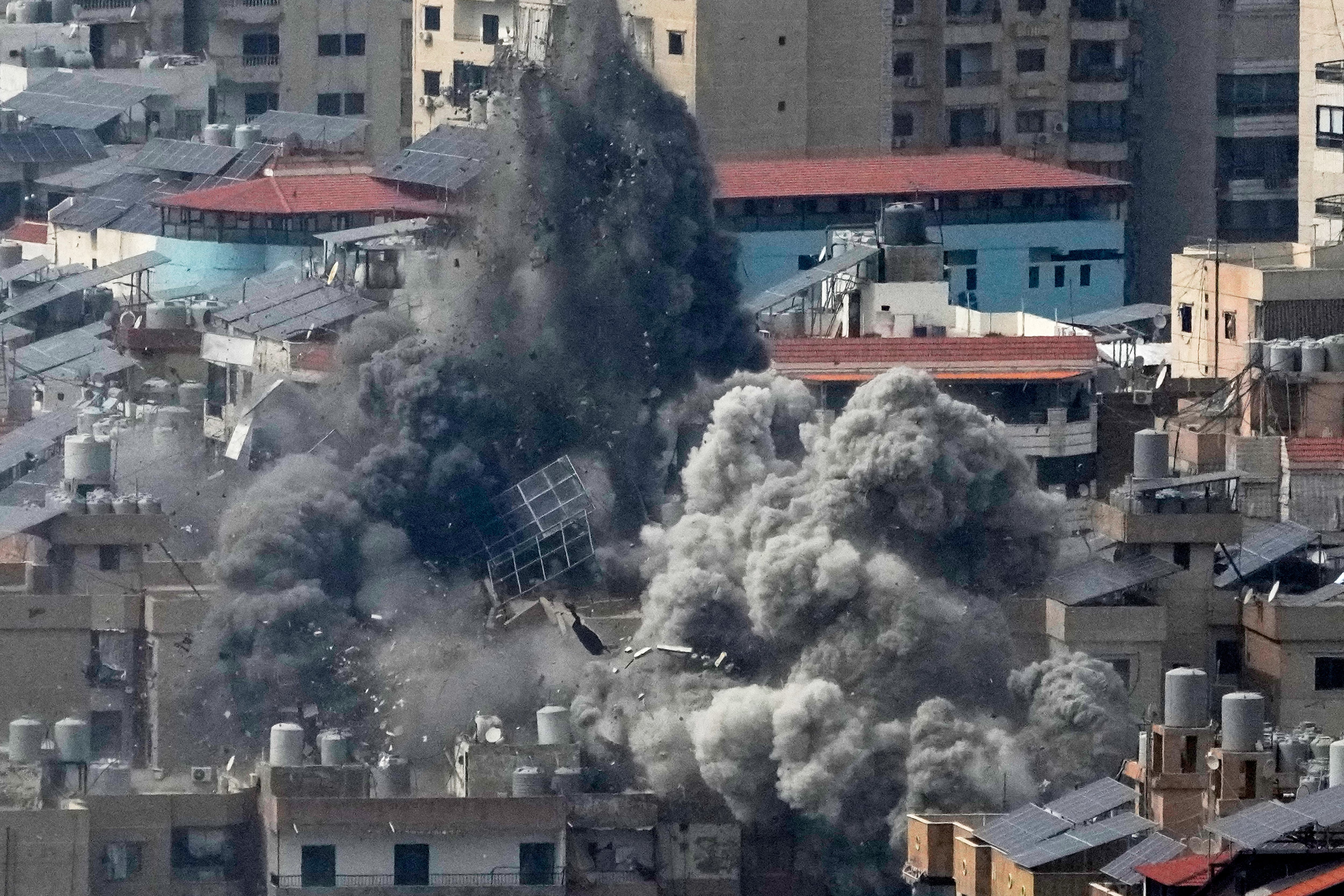

Israeli warplanes pounded Beirut and Tehran on Friday as Iran launched another wave of retaliatory strikes against Israel and Gulf countries that host U.S. forces.
1. Russia has provided Iran with information that could help Tehran strike American warships, aircraft and other assets in the region, according to two officials familiar with U.S. intelligence on the matter. It’s the first indication that Moscow has sought to get involved in the war. 2. U.S. President Donald Trump appeared to rule out negotiations with Iran in a social media post calling for its “unconditional surrender.” White House press secretary Karoline Leavitt later added that “unconditional surrender” could come even if Iran isn’t in a position to say so for itself. Trump told media outlets on Thursday that he wants to be involved in picking Iran’s next leader. 3. The death toll continues to rise. At least 1,230 people in Iran, more than 200 in Lebanon and around a dozen in Israel have been killed, according to officials in those countries. Six U.S. troops have been killed. 4. The U.S. military said early Friday that it struck an Iranian drone carrier, setting it ablaze. Its Central Command released black-and-white footage of the burning carrier. The Iranian military did not immediately acknowledge the attack.
Here is the latest:
Drones hit Basra oil sites, including US contractor facilities
At least two drones struck energy infrastructure and facilities of U.S. contractors in Iraq’s southern Basra province Friday evening, according to two security officials who spoke on the condition of anonymity as they were not authorized to speak with the press.
The officials added that unmanned aerial vehicles targeted a compound housing foreign oil company offices and warehouses, triggering fires at facilities linked to U.S. energy services firms.
The attack comes amid a spate of drone and missile incidents across Iraq and the region, including strikes on oil fields and the cargo section of the Basra International Airport.
It was not immediately clear if there were any casualties.
— Qassem Abdul-Zahra
Trump says he’s getting defense contractors to ramp up production of high-end weapons
Facing questions about whether the Iran war is depleting certain U.S. stockpiles, the president said top defense manufacturers “have agreed to quadruple Production” of “exquisite” weapons.
The term often is used to describe more unique, expensive or technically complex weapons, like hypersonic missiles or long-range air interceptors, broadly understood to be held in lower numbers than more traditional munitions.
In his social media post, Trump didn’t offer details about which specific weapons would see a rise in production. He also said he has stepped up orders of more basic munitions, “which we are using, as an example, in Iran, and recently used in Venezuela.”
Gen. Dan Caine, chairman of the Joint Chiefs of Staff, told reporters this week that the military had “sufficient precision munitions for the task at hand.” But he also said the military was shifting from using long-range rockets to less sophisticated bombs with shorter ranges.
Israeli military says it has begun a ‘broad-scale’ wave of strikes on Tehran
The message came minutes after the Israeli military said it was working to intercept missiles launched from Iran toward Israel very early Saturday.
Many thunder-like booms rumbled over Jerusalem just past midnight local time.
Scott Bessent warns of big night of bombing in Iran
The U.S. Treasury secretary told FOX Business host Larry Kudlow that Friday night would be the United States’ “biggest bombing campaign” in Iran. U.S. and Israeli officials have said this week that attacks on Iran would increase.
Earlier this week Trump told CNN the “big wave is yet to come.” Additionally, Defense Secretary Pete Hegseth said Thursday that firepower over Tehran would “surge dramatically” through “more bomber pulses more frequently.”
AP video shows Iran is firing cluster munitions toward Israel, munitions expert says
The video from Thursday night showed what appear to be Iranian ballistic missiles flying over the occupied West Bank and dropping smaller bomblets.
An independent weapons expert said they were cluster munitions. N.R. Jenzen-Jones, director of Armament Research Services, reviewed the video and said that, based on the number of visible objects seen, submunitions were released from an Iranian ballistic missile that was fitted with a cargo warhead.
Israel says Iran has fired cluster munitions toward the country and its police and on Friday published a public service announcement in which a bomb disposal technician warned about the dangers of cluster bombs.
Israel has used cluster munitions in previous wars in Lebanon, as have other countries such as Russia and Syria. According to AP reporting, the US last used them in 2003 in Iraq but continues to keep them in its arsenal and has not joined a convention banning their use
Proponents of a ban say they kill indiscriminately and endanger civilians long after their use.
US to send anti-drone system to the Mideast after successful use in Ukraine, officials say
The system, developed by an American company, will soon head to the Middle East to help defend against Iranian drones.
It fires drones against drones and has shown success in fighting those used by Russia in its war against Ukraine. The system was deployed to Romania and Poland last year.
While the U.S. has used Patriot and THAAD missile systems to take down Iranian missiles, a U.S. defense official says there are limited effective U.S. anti-drone defenses now in the Middle East.
Another U.S. official called the U.S. response to countering Iran’s Shahed drones “disappointing.”
Both spoke on condition of anonymity to discuss sensitive military matters.
— Emma Burrows
More than 100,000 displaced by Israel-Hezbollah conflict
Lebanon’s Disaster Risk Management Unit said 110,162 people have been internally displaced following Israeli evacuation warnings for areas in southern and eastern Lebanon and across Beirut’s southern suburbs, a densely populated district on the outskirts of the capital that is home to hundreds of thousands.
The unit, which operates under the prime minister’s office, said 512 shelters are open nationwide.
The Lebanese government has said it opened additional shelters in the north and east as well as a large football stadium near Beirut to accommodate the surge of displaced people.
More than 200 people in Lebanon have been killed in Israeli strikes so far, according to the Lebanese Health Ministry.
Scott Bessent says Treasury may remove additional sanctions on Russian oil
The Treasury secretary said his agency “may un-sanction other Russian oil” in order to boost the global supply as the U.S. continues its attacks on Iran.
“There are hundreds and millions of sanctioned barrels of sanction crude on the water,” Bessent told FOX Business host Larry Kudlow, Friday afternoon. “And in essence, by un-sanctioning them, Treasury can create supply.”
“We’re going to keep a cadence of announcing measures to bring relief to the market during this conflict,” Bessent said.
3 UN peacekeepers wounded in southern Lebanon
Three U.N. peacekeepers were wounded after heavy firing struck a base of the United Nations Interim Force in Lebanon (UNIFIL), in the village of Al-Qawzah on Friday evening, the mission said in a statement.
UNIFIL said the peacekeepers were inside their base when the attack occurred. One of the injured was transferred to a hospital in Beirut for treatment, while the two others were being treated at a UNIFIL medical facility, the statement said. A fire that broke out at the base was later extinguished, the statement added.
UNIFIL said it would investigate the circumstances surrounding the incident, adding that it was “unacceptable that peacekeepers performing Security Council-mandated tasks are targeted.”
It was not immediately clear who carried out the firing.
An Associated Press report last month cited an internal military document describing a surge in incidents involving Israeli forces near U.N. peacekeepers in southern Lebanon, including drone-dropped grenades and gunfire near their positions.
Putin speaks to his Iranian counterpart, expresses condolences
The Russian president had a call Friday with Iranian President Masoud Pezeshkian. He expressed condolences over the killing of Supreme Leader Ayatollah Ali Khamenei and “numerous civilian casualties resulting from the U.S. and Israel’s armed aggression.”
In the call, the first reported by the Kremlin since the start of the war, Putin “reaffirmed Russia’s principled stance in favor of an immediate cessation of hostilities, the rejection of force as a method to solve any issues surrounding Iran or arising in the Middle East, and a swift return to the path of diplomatic resolution,” according to the Kremlin’s readout.
It said Pezeshkian “expressed gratitude for Russia’s solidarity with the Iranian people as they defend their sovereignty and the independence of their country” and offered a “detailed update on the developments during the latest active phase of the conflict.”
Qatar announces partial resumption of air navigation despite recent drone strikes
Qatar announced Friday evening that it would partially resume flights with limited operational capacity as the conflict in the region widens.
Qatar Civil Aviation Authority said on the social platform X that a limited number of flights will resume through designated contingency routes, including for passenger evacuation and air cargo.
Airspaces have closed, cruise ships and tankers have been unable to pass through the Strait of Hormuz, and major airlines have canceled flights as the war widened.
Qatar’s defense ministry said the country faced “waves of attacks” from dawn until evening, involving 10 drones. Nine of them were intercepted, while one fell in an uninhabited area.
Israeli army says it will not evacuate its citizens from villages along Lebanese border
An officer spoke to journalists along the border with Lebanon to the backdrop of consistent booms from missiles being intercepted and alerts warning that drones were incoming. The officer spoke on condition of anonymity as per the army’s regulations.
He said Israel has deployed troops to protect some 200 Israeli families living on the border and the army is placing soldiers between civilians and Hezbollah to protect them.
Northern Israel is receiving missiles from both Iran and Hezbollah. Atop a lookout of Israel’s northern villages that are adjacent to Lebanese ones, the officer briefed journalists as they sought shelter between alerts.
— Sam Mednick
More information on Israel’s ground operation in southern Lebanon
An Israeli military official told AP that Israeli soldiers have taken up around five to seven new positions in southern Lebanon, some of which are dynamic, expanding beyond the five strategic locations held since a U.S.-brokered ceasefire halted a round of fighting in late 2024.
Israel’s military said it was sending additional troops into southern Lebanon after the Iran war began but did not give specifics on how exactly it was expanding its presence.
The official, who spoke on the condition of anonymity in line with military protocol, characterized the operation as a limited expansion of Israel’s ceasefire presence along the five points. He said there were around five to seven — but under a dozen — contingents of troops who were setting up defensive blocking positions and ambushes for Hezbollah and roaming the border area. He maintained that the soldiers were meters, not miles, into Lebanese territory.
He said so far the ground forces has killed about a dozen Hezbollah militants but did not provide evidence for the claim. He said none were senior-level operatives.
— Julia Frankel
Hotel attacked in northern Iraq
Associated Press journalists in the area heard explosions Friday and saw smoke rising. There was no immediate report of casualties or damages.
Irbil Gov. Omid Khoshnaw told the Rudaw TV network that “the attack was successfully thwarted” and the drone crashed.
The U.S. Embassy in Baghdad earlier Friday had warned that militias “may seek to target hotels frequented by foreigners in the Iraqi Kurdistan Region.”
The Kurdish region’s counterterrorism unit said in a statement that U.S.-led coalition forces intercepted and shot down four explosive-laden drones, one of which landed near a hotel. It said no casualties were reported.
World’s largest aircraft carrier moves in
The USS Gerald R. Ford has moved from the Mediterranean Sea to the Red Sea, transiting the Suez Canal on Thursday, according to images posted to a Pentagon website.
The aircraft carrier was ordered to the region from the Caribbean Sea in mid-February and had been operating in the eastern Mediterranean for the opening days of the war with Iran. At least one of the destroyers accompanying the carrier also transited the canal, according to the images posted online.
UN Humanitarian Chief fears Iran war and spillover will divert desperately needed aid from other conflicts
Staggering amounts of money are funding a war “spent on destruction while politicians continue to boast about cutting aid budgets for those in greatest need,”
Undersecretary-General Tom Fletcher said. This leaves less attention and funding for help in conflicts and crises in Gaza, Ukraine, Sudan, South Sudan and Congo.
“As conflicts spread, the international system pulls further apart and more resources flow towards weapons rather than the funding, the political will, the diplomatic energy, needed for saving lives,” Fletcher told U.N. reporters Friday. “Humanitarian action is always harder in times of war but this, of course, is when it is needed most.”
“We need calmer heads to prevail,” Fletcher said.
US attack on Iranian warship did not violate international law, experts say
A U.S. submarine’s deadly attack on an Iranian warship does not appear to have violated international or American military law, though it’s not yet clear whether the sub took sufficient measures to rescue nearly three dozen survivors, legal experts said.
Legal questions are swirling about the underpinnings for the entire U.S.-Israeli military operation against Iran as well as the aftermath of the torpedo attack on the IRIS Dena in the Indian Ocean, the experts said.
Eighty-seven people died and 32 Iranian sailors were rescued after the sub torpedoed the Dena in international waters near Sri Lanka.
While the attacks on Iran overall are “a clear violation of the UN charter,” the Dena was “a clear military target,” said Marko Milanovic, professor of international law at the University of Reading in Britain. “Targeting a military vessel is not a war crime,” Milanovic said.
▶ Read more
Evidence suggests a US airstrike likely caused the deadly Iranian girls school blast
Satellite images, expert analysis and information released by the U.S. and Israeli militaries suggest that the Feb 28 explosion that killed scores of Iranian students at a school was likely caused by U.S. airstrikes:
5. The launching of an assessment of the incident by the U.S. military. According to the Pentagon’s instructions on processes for mitigating civilian harm, an assessment is launched after a group of investigators make an initial determination that the U.S. military may bear culpability. 6. The school’s location next to a base of the Revolutionary Guard in Hormozgan Province and close to a barracks for its naval brigade. The U.S. military has focused on naval targets and acknowledged strikes in the province, including one in the vicinity of the school. The U.S. is operating warships in the Arabian Sea, including the USS Abraham Lincoln aircraft carrier, within range of the school. 7. Israel has focused on areas of Iran closer to Israel and hasn’t reported conducting any strikes south of Isfahan, 800 kilometers (500 miles) away. 8. Experts say the tight pattern of the damage visible on the satellite photos is consistent with a targeted airstrike.
Iran has blamed Israel and the United States for the blast. Neither country has accepted responsibility.
▶ Read more
How the Iran war is affecting countries across the Middle East
The broadening Iran war has ricocheted across the region and beyond, with nearly every country in the Middle East sustaining damage from missile hits, drone strikes or shrapnel. Many are reporting casualties, and key embassies, economic engines and passageways have closed down.
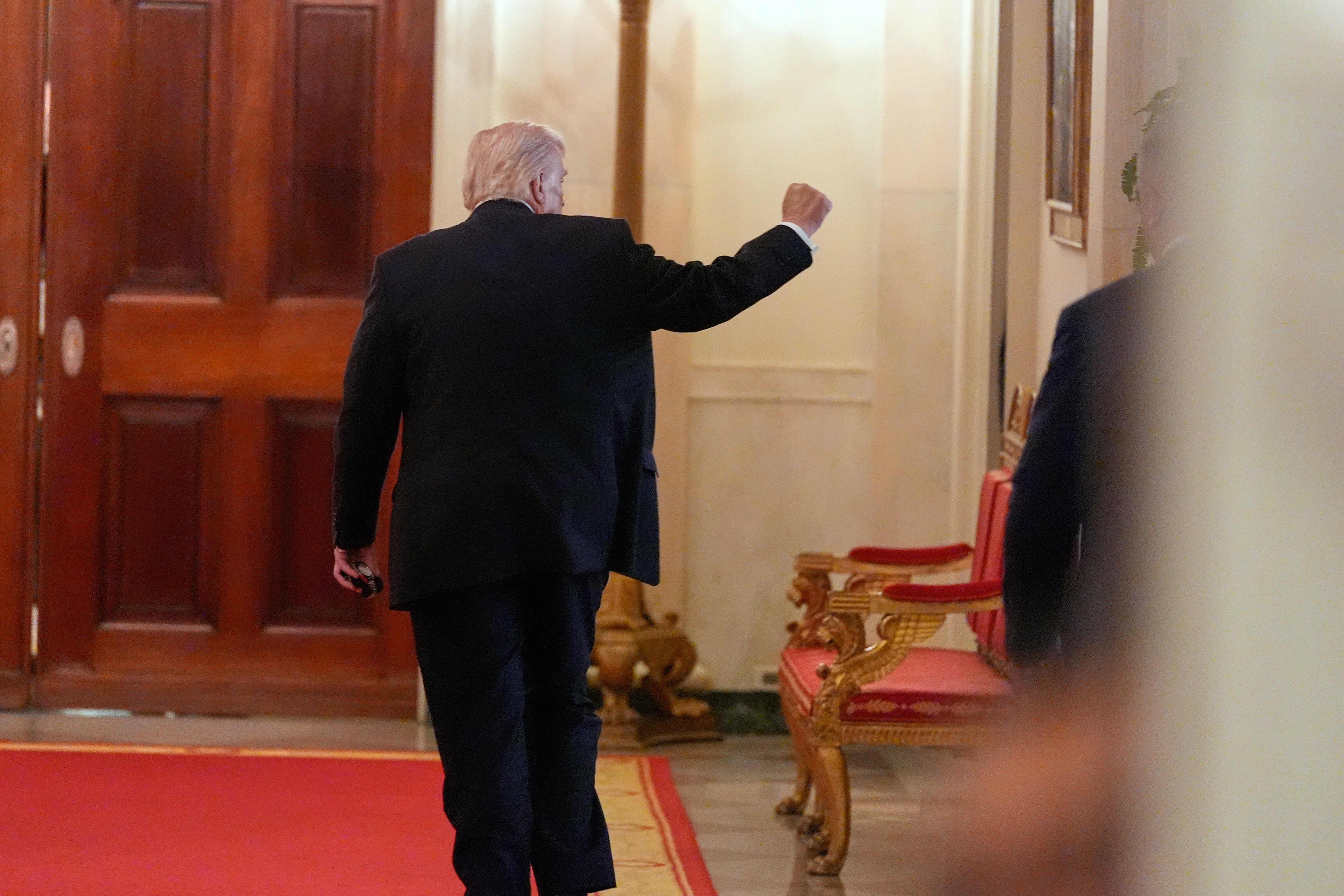
On Friday, the seventh day of war, Israeli warplanes struck Beirut and Tehran as Iran launched another wave of retaliatory strikes against Israel and Gulf countries. There was no sign of the war letting up, as Trump appeared to rule out negotiations and called for Iran’s “unconditional surrender.”
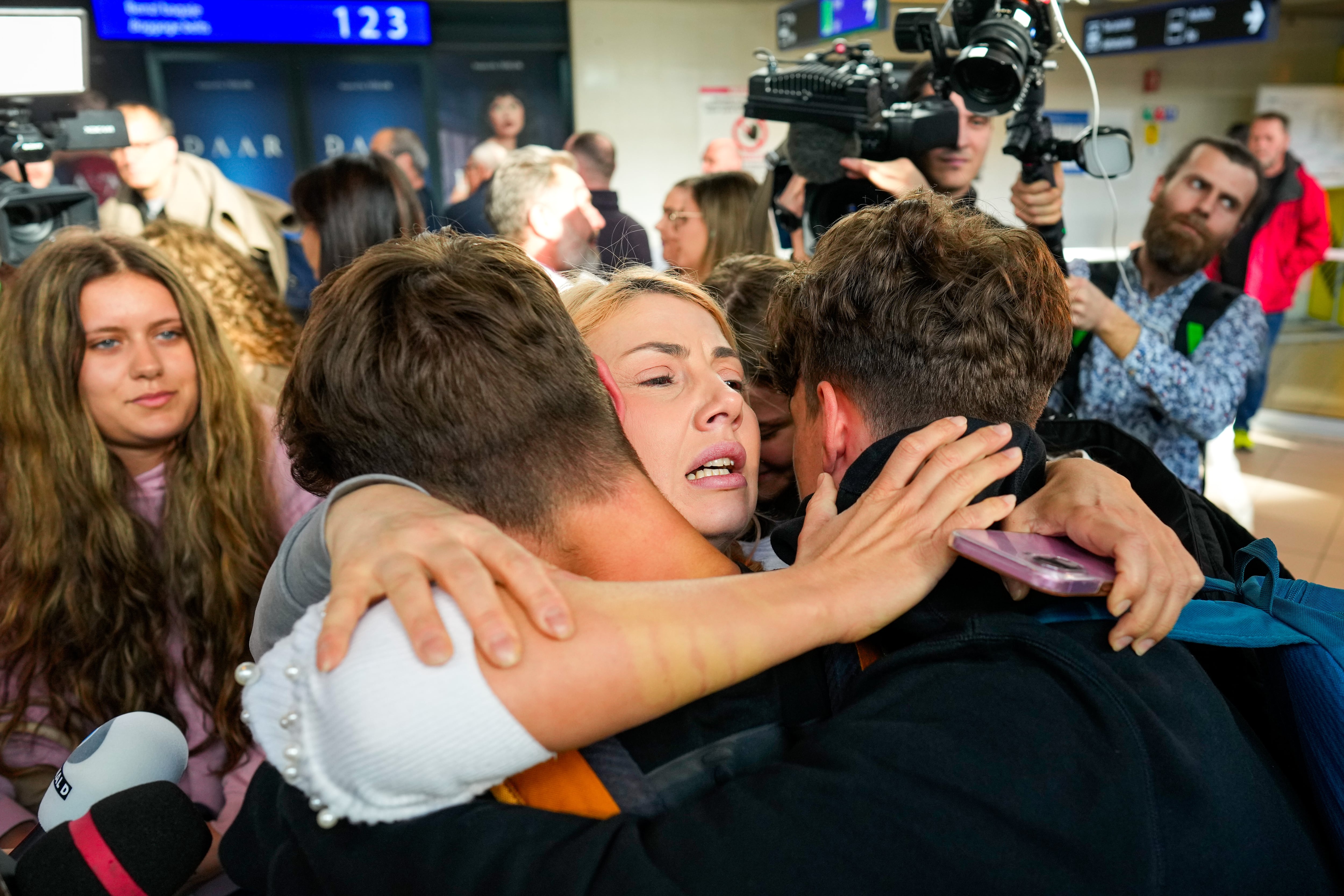
Countries around the world have scrambled to organize repatriation flights, and meanwhile urged their citizens to leave the region on any available commercial flight. Airspaces have closed, cruise ships and tankers have been unable to pass through the Strait of Hormuz, and major airlines have canceled flights.
▶ See a country-by-country breakdown of the war’s impact so far
What to know about the late Iranian leader's son and possible successor his father
Mojtaba Khamenei, son of Ayatollah Ali Khamenei, has growing support among the clerics tasked to select Iran’s next supreme leader.
A secretive figure within the Islamic Republic, Mojtaba Khamenei has not been seen publicly since Saturday, when the U.S.–Israel war with Iran began and an airstrike killed his 86-year-old father. He is widely believed to be alive and possibly in hiding, though state media haven’t disclosed any information about his whereabouts.
Trump, however, insists on being involved in selecting Iran’s next supreme leader, and said “Khamenei’s son is unacceptable to me.”
Iran’s next supreme leader would control the country’s military and a stockpile of highly enriched uranium that could be weaponized, should the leadership decide to decree it.
▶ Read more
Russia has provided Iran with information that can help Tehran strike US military, AP sources say
Russia has provided Iran with information that could help Tehran strike American warships, aircraft and other assets in the region, according to two officials familiar with U.S. intelligence on the matter.
The people, who were not authorized to comment publicly on the sensitive matter and spoke on the condition of anonymity, cautioned that the U.S. intelligence has not uncovered that Russia is directing Iran on what to do with the information.
Still, it’s the first indication that Moscow has sought to get involved in the war that the U.S. and Israel launched on Iran a week ago. Russia has tightened its relationship with Iran as it looked for badly needed missiles and drones to utilize in its four-year war Ukraine. Tehran, meanwhile, has been isolated for years over its nuclear program and its support of proxy groups, including Hezbollah, Hamas and the Houthis, that have wreaked havoc in the Middle East.
— Seung Min Kim and Aamer Madhani
White House press secretary offers a definition of ‘unconditional surrender’
Asked what Trump meant by accepting only “unconditional surrender,” Karoline Leavitt said Friday that will be achieved when the president “determines that Iran no longer poses a threat to the United States of America” and the mission’s goals have “been fully realized.”
“Then Iran will essentially be in a place of unconditional surrender,” she told reporters outside the White House “whether they say it themselves or not. Frankly they don’t have a lot of people to say that for them.”
Copyright 2026 The Associated Press. All rights reserved. This material may not be published, broadcast, rewritten or redistributed without permission.