

EDITOR’S NOTE: On June 6, 1989, millions of Iranians turned out in the streets to bury Ayatollah Ruhollah Khomeini, who led the 1979 Islamic Revolution. The situation quickly got out of control.
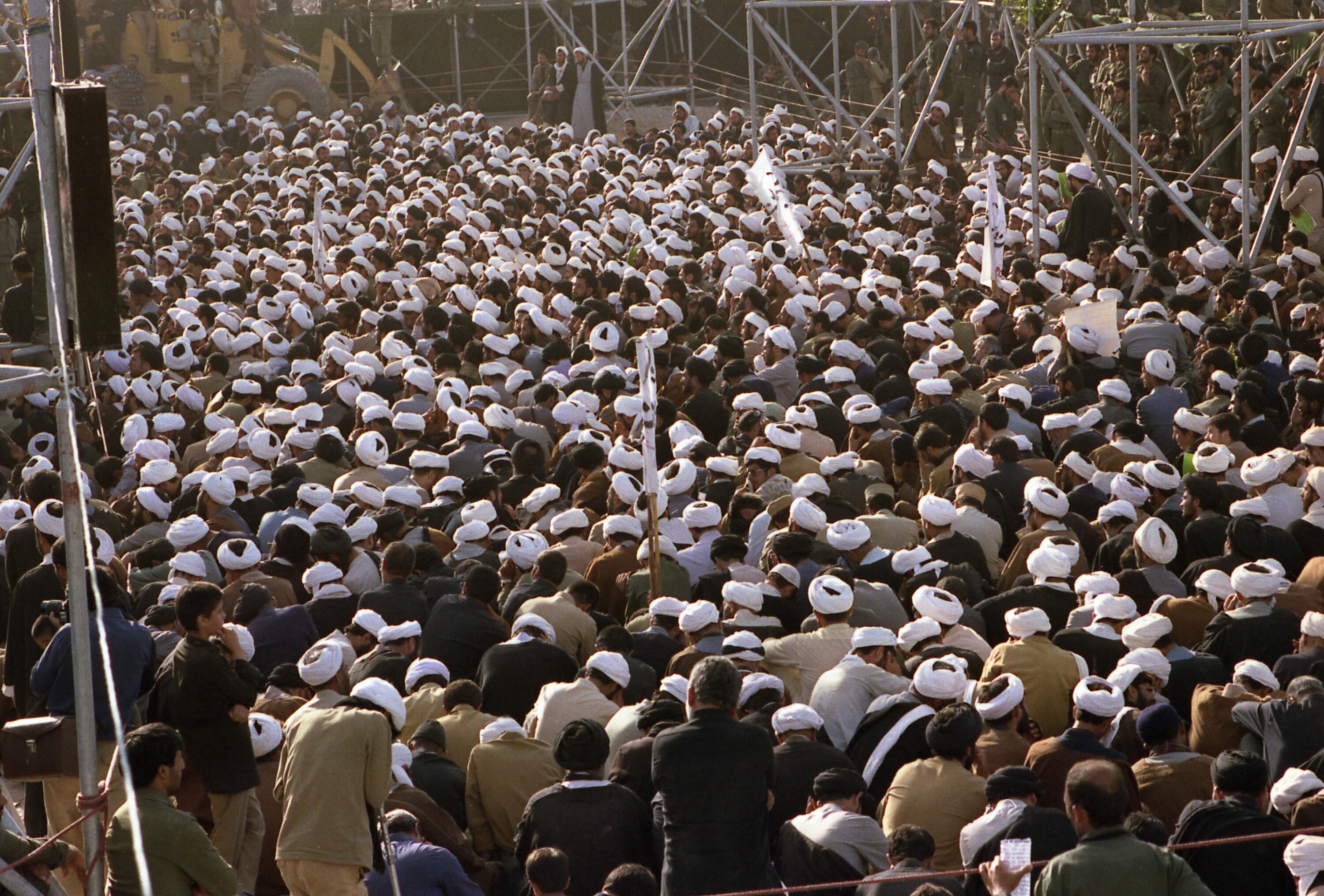
Those in the crowd beat their chests rhythmically in the intense summer heat, the wails of women cutting through the noise. Mourners rushed the casket, causing the 86-year-old religious leader's white-wrapped body to tumble out into the crowd.
Initial reports said the chaos killed at least eight people and injured some 11,000 others. It was recognized by Guinness World Records as the largest percentage of a population to attend a funeral, drawing an estimated 10.2 million people — about one-sixth of Iran’s population at the time
Now, as Iran prepares to bury the late Supreme Leader Ayatollah Ali Khamenei, The Associated Press is making its story and historic photographs of Khomeini's funeral available. The story has been edited for typographical errors, but maintains the AP style of the day.
___
Mourners Block Funeral, Postpone Burial; Scores Crushed in the Chaos
By ALEX EFTY
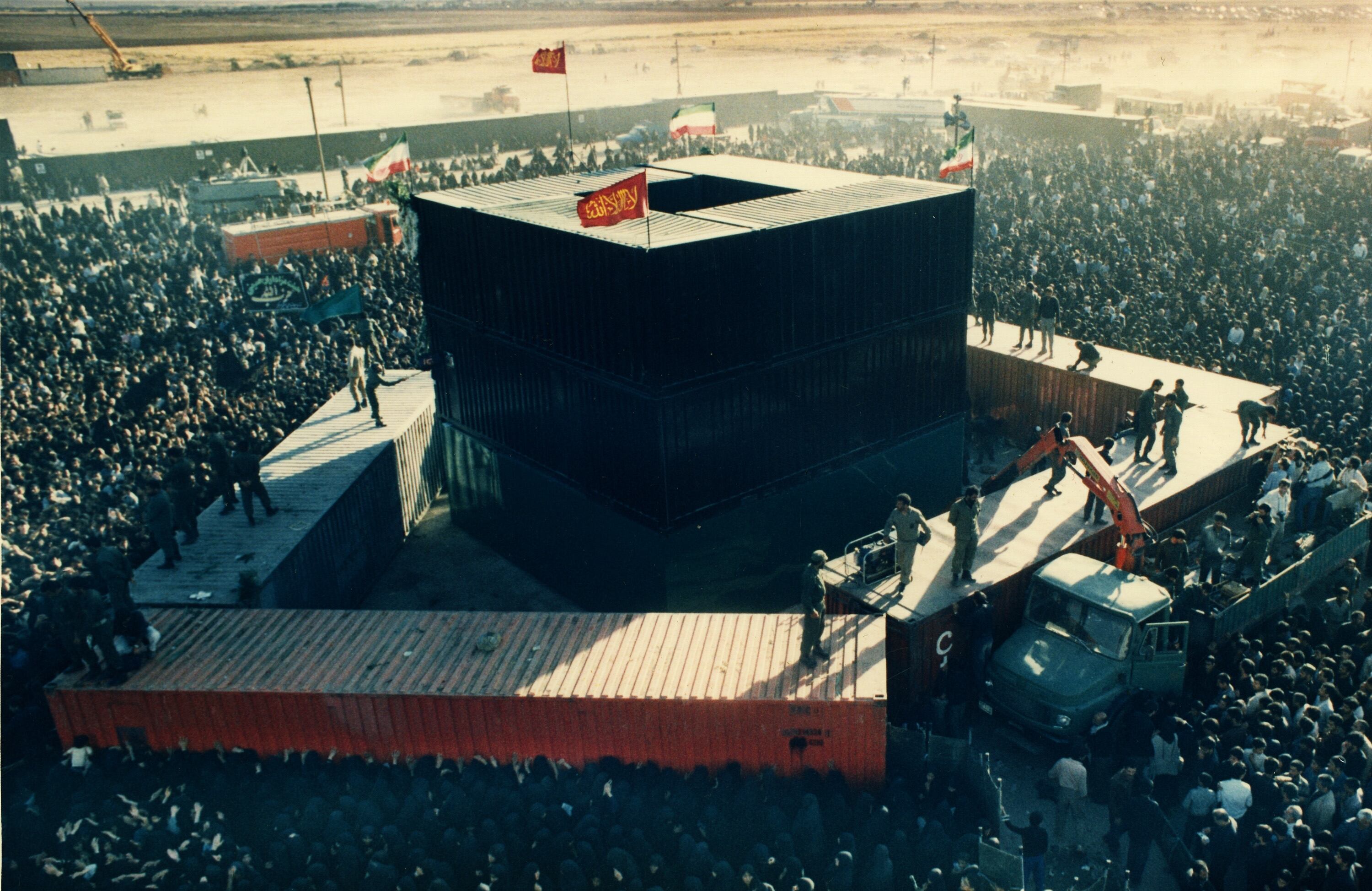
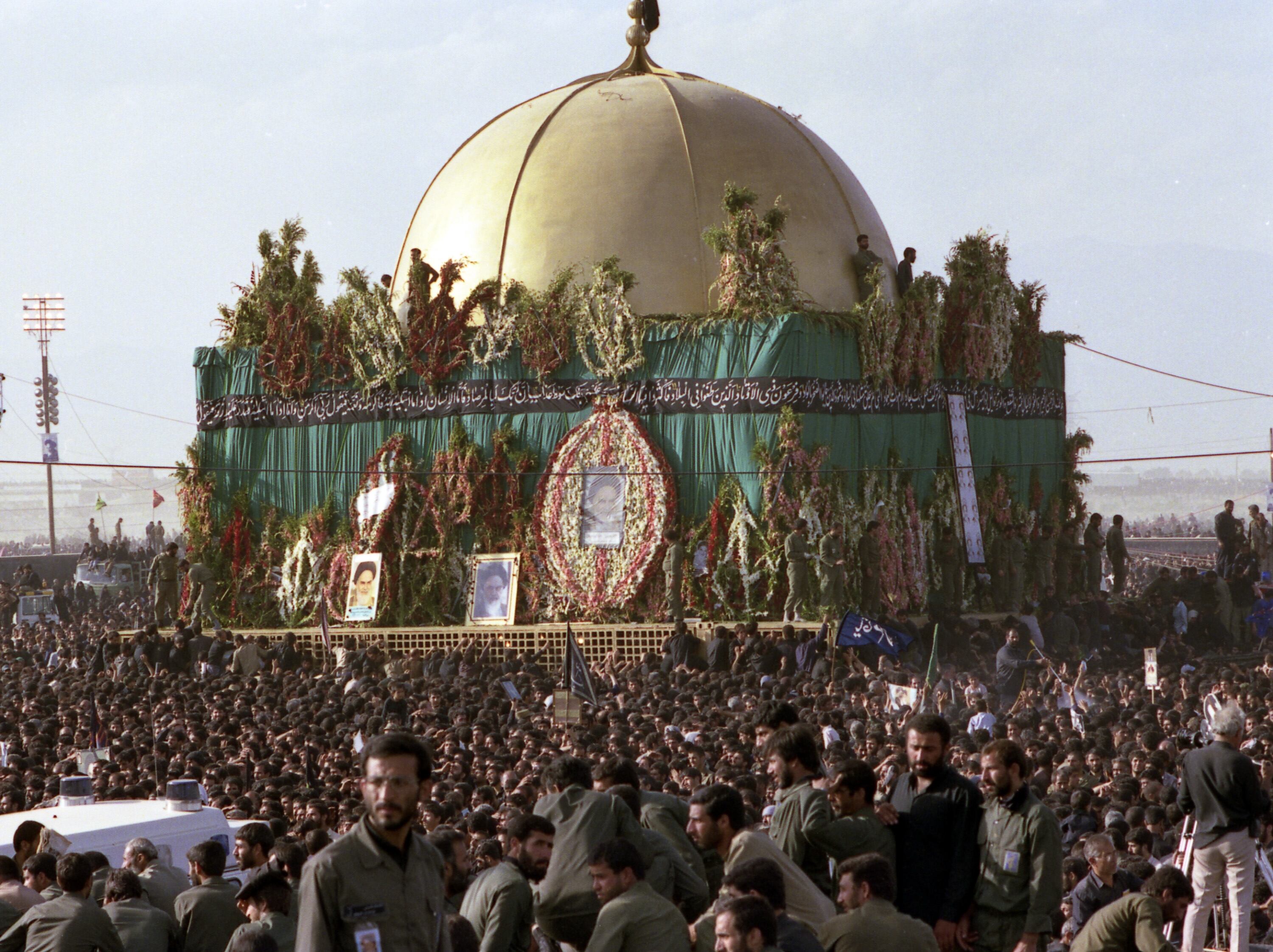
TEHRAN, Iran (AP) — Millions of mourners beating on their heads and chests today blocked the funeral procession of Ayatollah Ruhollah Khomeini, and scores of people, including Khomeini’s son, were crushed in the chaos.
The unyielding crowds forced authorities to postpone the burial.
There was no immediate word on if or how many people were killed, injured or simply fainted because of the 91-degree heat. At least eight people were killed and hundreds hurt Monday during a similar huge show of mass grief.
Security forces fired in the air to disperse the crowds, but the grieving multitudes remained, the official Islamic Republic News Agency reported.
The Revolutionary Guards beat mourners on their hands to let go of Khomeini’s coffin.
Khomeini’s only son, Ahmad, 43, was knocked down in the dusty north Tehran square outside the Mosalla Mosque where Khomeini’s body had lay in state since Monday in an air-conditioned glass-encased bier.
Ahmad Khomeini’s white turban fell off as he was being hoisted above the crowds and passed from hand to hand to an ambulance at the edge of the square. He appeared pale and drowsy, but conscious.
The hearse carrying the body was stranded in a sea of mourners clad in black, unable to move forward because of the crowds, IRNA said.
Tehran television said it was “impossible” to break through the grieving multitudes to bury Khomeini before dusk. Islam forbids burying the dead after nightfall.
Khomeini died Saturday at age 86.
He was to be buried at the Baheshte Zahra cemetery, 22 miles south of Tehran, alongside victims of the Islamic revolution that catapulted him to power 10 years ago and thousands killed in the Iran-Iraq war.
The television said alternative arrangements for Khomeini’s burial would be announced later.
Shouts of “Allah Akbar!” God is Great, echoed across the city. The hearse had hardly covered a half mile of the journey two hours into the funeral procession.
Many of Tehran’s 6 million people turned out to bid Khomeini farewell. Millions more converged on the city from other regions, the official media reported.
The procession began at 7 a.m. when Khomeini’s devout militants, the Revolutionary Guards, carried his body down from the bier.
Five helicopters hovered overhead as a martial band played somber tunes.
Khomeini’s body was wrapped in the Islamic republic flag and laid on the ground in the open air as the white-bearded Ayatollah Mohammad-Reza Golpaygani prayed. Golapaygani, one of the four remaining senior ayatollahs in Iran, choked often and lifted his spectacles to wipe tears with a handkerchief.
After the 30-minute service, Khomeini’s body was placed in a wooden coffin that was covered with a white cloth, then carried by Revolutionary Guards from hand to hand into a white van.
Crowds cried hysterically. Readings from the Koran, Islam’s holy book, blared from the mosque’s minaret as the masses cried: “Farewell beloved imam!” and “Oh Khomeini, why have you left us?”
They pounded their heads and chests with clenched fists in a traditional Shiite Moslem expression of grief.
In the chaos, women, clad in head-to-toe black chadors, were rubbing shoulders with men, defying an Islamic ban on physical contact between a woman and a man other than her husband.
Firefighters sprayed the mourners with water to cool them off.
About 2 million frenzied mourners had kept a nightlong candle-lit vigil around the bier.
Some mourners scratched their faces until the blood ran and threw ashes over their clothes.
Khomeini died of a heart attack 11 days after intestinal surgery without resolving the problem of who would succeed him. He left a 29-page “political testament,” excerpts of which were read over Tehran radio on Monday.
The excerpts made no reference to how Iran should be governed after his death. But such proposals may have been in the sections that still have not been made public.
President Ali Khamenei, 49, was appointed caretaker leader Sunday. A presidential election and referendum on constitutional reforms, which are likely to increase the president’s executive power, are scheduled for Aug. 18.
Khamenei’s swift appointment was designed mainly to fill the vacuum amid political turmoil that has prevailed since Khomeini launched his resurgence of Islamic fundamentalism in February with a call for the death of British novelist Salman Rushdie.
In the absence of a single personality who can match Khomeini’s religious and political authority, it seemed likely that Iran would be ruled by a collective leadership.
Khamenei has endorsed the presidential candidacy of Parliament Speaker Hashemi Rafsanjani, 55, a political ally and the only declared candidate.
Former Iranian President Abolhassen Bani-Sadr said from exile in France that Khamenei’s appointment indicated “total failure” by the government.
“Imagine a church that cannot find a pope. It is exactly the same, like a dynasty that cannot find a king. … It will not last,” he said.
Copyright 2026 The Associated Press. All rights reserved. This material may not be published, broadcast, rewritten or redistributed without permission.