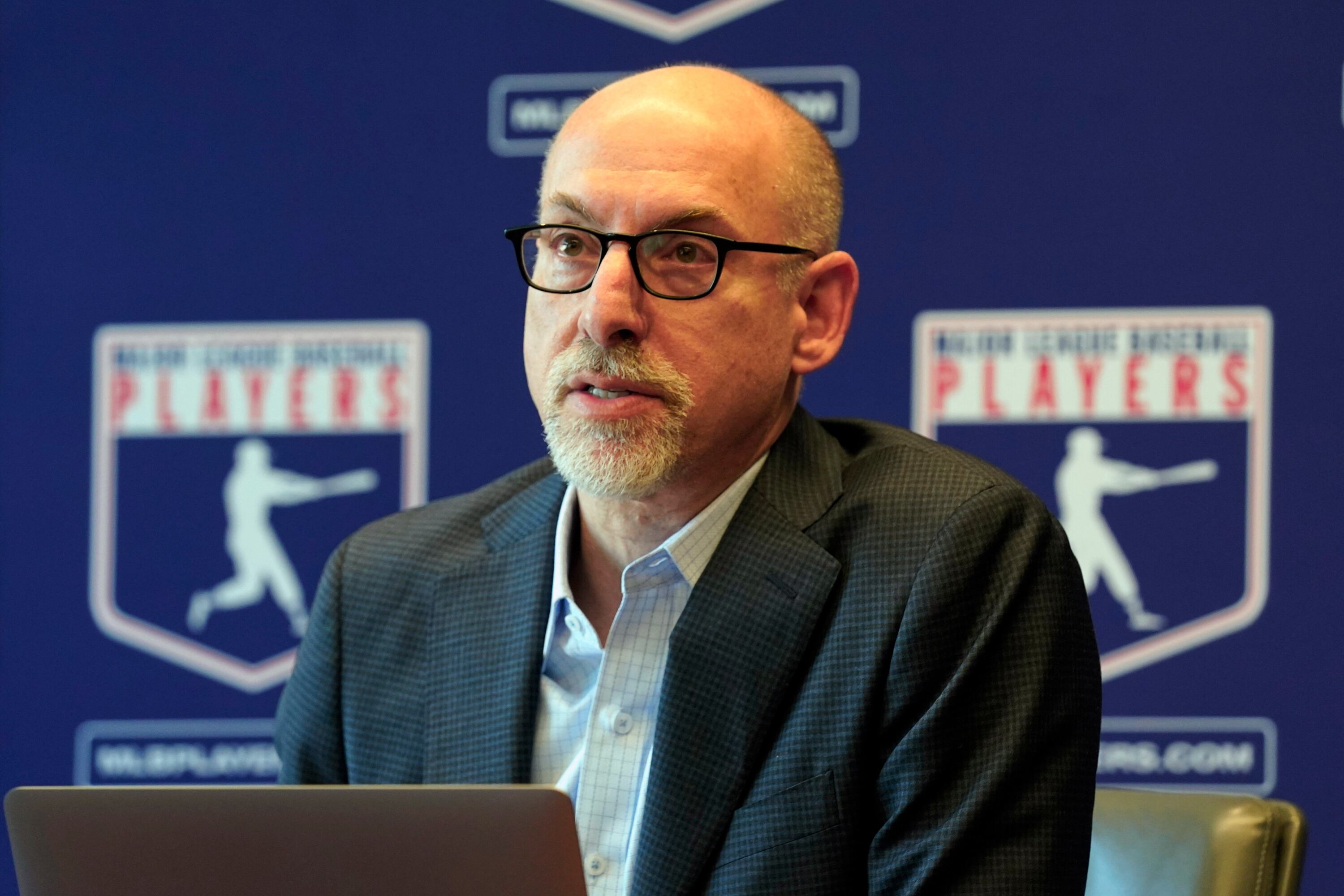

NEW YORK (AP) — Baseball players proposed expanding eligibility for the amateur draft rather than decreasing it, maintaining 20 rounds of selections and moving it back to June in a signal the sport is heading to a labor confrontation this offseason.
During a two-hour bargaining session Tuesday at Major League Baseball’s headquarters, the union proposed allowing college sophomores to be eligible for the draft along with those finishing their junior years, a group eligible under the current rules along with high school seniors.
Players proposed moving the draft back to June, when it was held through 2020. They asked that draft slot values continue to be increased at the same percentage as industry revenue through 2027 and may not be decreased for the remainder of the agreement.
Baseball’s five-year labor contract expires Dec. 1 and a management lockout is expected that would halt offseason trades and signings, and threaten the start of spring training workouts on Feb. 9 and opening day on March 24.
MLB in May proposed a salary cap for the first time since players fought off a proposal during a 7 1/2-month strike in 1994-95 that led to the first cancellation of the World Series in 90 years. Players vow never to accept a cap.
MLB said last month it wanted to eliminate eligibility for high school seniors and junior college players, arguing college programs offer better preparation for professional careers. MLB also proposed cutting the draft to 12 rounds in 2027.
The union also wants maintain the ability for players to negotiate deals rather than have fixed slots, reduce penalties for exceeding signing bonus pools, allow more draft selections to be traded and keep competitive balance round selections.
It would allow a $2 million signing bonus pool increase for a revenue-sharing recipient team that is not in a large market in one draft from 2027-31 and also allow those teams to sign two players drafted before the third round to major league contracts rather than minor league deals.
Revenue-sharing recipients that reach the postseason would receive an extra $1 million in their signing bonus pool in the following draft.
Teams exceeding their signing bonus pools by up to 15% would not lose a pick in the next draft, up from 5%.
For players not drafted in the first 10 rounds, the signing bonus pool exemption would increase from $150,000 to $1,000 over the figure for the last 10th-round selection, which was $191,900 this year. For draft and follow players — those who play an additional junior college season after the draft — the signing bonus maximum would rise from $225,000 to $75,000 above the last 10th-round pick's slot value.
Players would agree to MLB's proposal that draft picks could be traded during a period of about a month starting in early November and for the month prior to the draft.
Selections acquired could be traded on to another team but cash couldn't be included except to offset salary of a player involved in the trade. Each team would be required to retain at least one first-round pick in a two-year period and no team could obtain more than three additional selections within the first three rounds. A newly drafted player could not be traded for the first 90 days after he signs or the day after the World Series ends, whichever is later.
Players proposed only picks in the first 10 rounds be tradable.
MLB claims the union's draft proposal in tandem with its revenue-sharing stance would not address payroll.
The union proposed that tax proceeds from penalties for exceeding amateur draft pools be split, with half going to joint funds and half to revenue-sharing recipients who made the playoffs in the prior season.
___
AP MLB: https://apnews.com/hub/mlb
Copyright 2026 The Associated Press. All rights reserved. This material may not be published, broadcast, rewritten or redistributed without permission.