
August can be a two-faced month for the Atlantic hurricane season. The month’s opening salvo can be muffled or, in some years, non-existent, but by the closing week of August the basin is typically off to the races, climbing quickly to its early September peak.
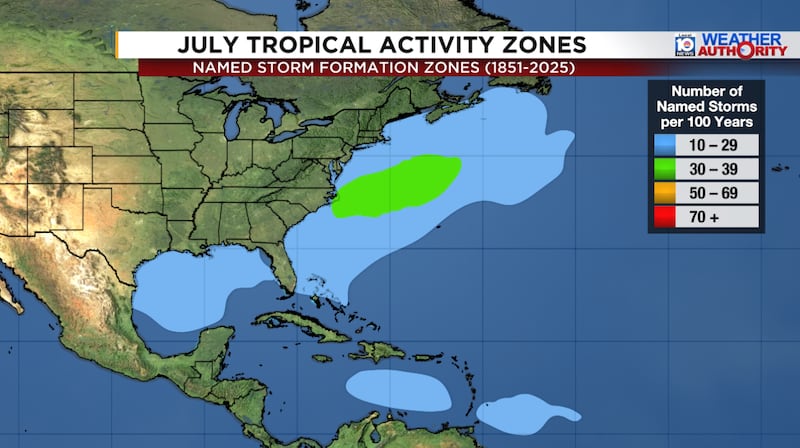
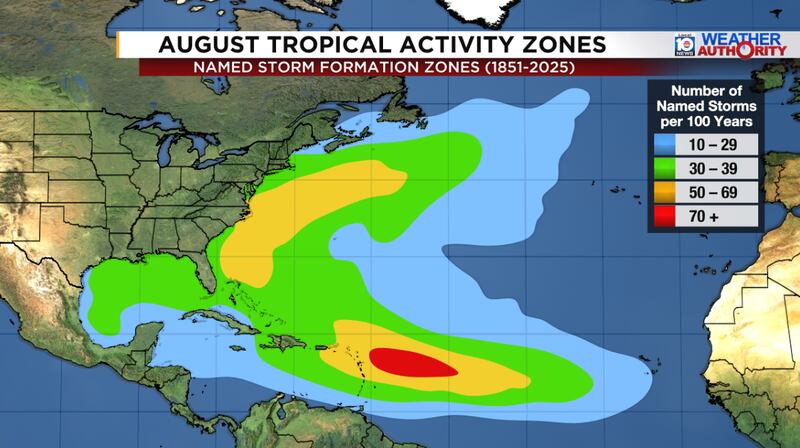
That’s in a typical season of course and not every season follows the calendar to the letter. We only have to go back to 2022 to find an August without a single tropical depression, named storm, or hurricane. But a scoreless August is a rare treat and although 2022 ultimately culminated with a burst of storm activity in September – including Hurricane Ian which decimated southwest Florida – in more years than not, a quiet August tends to portend lower levels of activity in September and October (see 1997 for an August shutout that ended as one of the least active seasons of the past 30 years).
We’ll see what this August brings, but regardless, we’re nearing the inflection point of the season where seasonal activity quickly catches up to the calendar. As of August 3rd, we’re 34% through the 6-month hurricane season, but with 92% of typical hurricane season activity still ahead. Roughly 93% of hurricanes historically form after August 3rd. But August chips away at those numbers, especially by its dying days and by mid-September the calendar and typical activity begin to mirror one another (that is, on average we’re roughly through 60% of the hurricane season by both calendar day and typical activity metrics come mid-September).
Development unlikely through the middle of August
On average over the past 30 years, the first half of August has recorded two tropical systems and one named storm. While hurricanes can happen, they form less frequently in the first part of the month compared to the latter part of August.

This August should start more like 2019, 2022, and 2023 which saw goose eggs to begin the first primetime month of the hurricane season. Those seasons picked up later on but if we’re lucky – with the historic El Niño taming the Atlantic – 2026 will end more like 2015 or 1997 which had no activity to start August and also ended with below average hurricane activity.
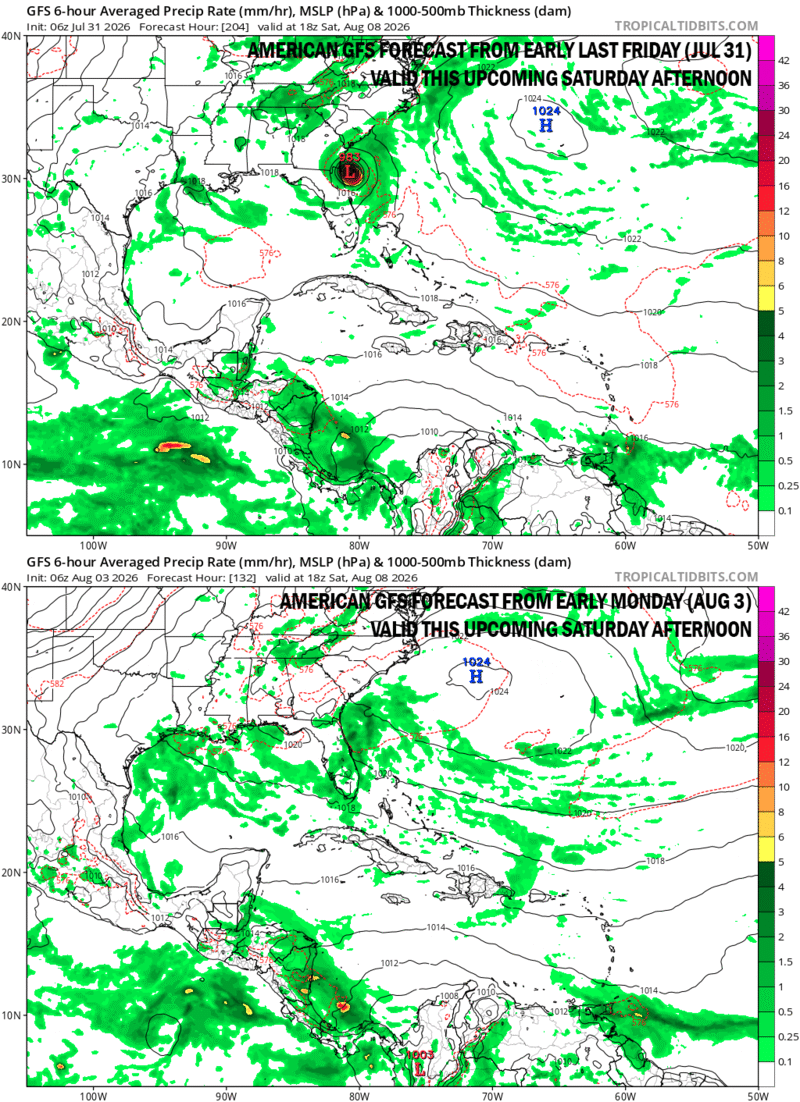
The disturbance we discussed in Friday’s newsletter that’ll be nearing the southeast U.S. this weekend isn’t expected to develop. The outlier American GFS boguscane that we mentioned Friday is, to no one’s surprise, no longer showing up in the model.
Meanwhile, models remain mostly lukewarm on development changes for a system in the far east Atlantic between Africa and the Caribbean by the middle part of the month. We’re still more than 10 days out, but development odds haven’t trended up since last week. We’ll check back but obviously this is nothing for us to worry about for now.
Copyright 2026 by WPLG Local10.com - All rights reserved.
